



 USA
USA Canada
 UK
UK Italy
Italy Sweden
 Australia

The Difference Between Mild, Moderate, and Complex Aligner Cases

If your teeth look only slightly crooked, does that automatically mean you have a mild aligner case? And if your smile looks noticeably misaligned, does that make your case complex?
Not necessarily.
One of the biggest misconceptions about aligner case types is that complexity can be judged simply by looking at how crooked the teeth appear. Orthodontic complexity goes deeper than appearance. Dentists and orthodontic professionals consider which teeth need to move, how far they need to travel, the type of movement required, how the upper and lower teeth fit together, and whether those movements can be predictably achieved with clear aligners.
That means two people whose smiles look quite similar could require very different treatment plans.
Understanding the difference between mild, moderate, and complex clear aligner cases can help you set more realistic expectations about treatment length, eligibility, refinements, and the level of clinical supervision your case may require.
What Are the Different Aligner Case Types?
Aligner case types are generally described as mild, moderate, or complex based on the amount and type of tooth movement required, the patient's bite, available space, and how predictably those movements can be achieved. Mild cases usually need smaller corrections, while complex cases may involve significant bite problems or difficult tooth movements.
These categories are useful for explaining aligner complexity levels, but they are not rigid universal diagnoses. Different providers and aligner systems may use slightly different criteria.
More importantly, complexity is determined by the mechanics of correcting the teeth, not simply by how the smile looks in a photograph.
What Makes an Aligner Case Mild?
A mild aligner case generally involves relatively small tooth movements without a significant underlying bite problem.
Someone may have one or two slightly rotated teeth, small spaces between teeth, minor crowding, or teeth that have shifted after previous orthodontic treatment. The overall relationship between the upper and lower teeth may already be reasonably good.
Common examples can include:
-
Minor front-tooth crowding
-
Small gaps between teeth
-
Mild rotations
-
Slight relapse after braces or previous aligner treatment
-
Small cosmetic alignment changes
Because the required movements are usually limited, mild cases often need fewer aligner stages than moderate or complex cases.
But "mild" does not mean "any small-looking problem is easy."
A single tooth can appear only slightly out of position while requiring a relatively challenging movement. For example, rotating certain teeth or moving a tooth vertically can be less predictable than simply moving a front tooth sideways by a similar-looking amount.
This is one reason visual appearance alone cannot determine aligner treatment depth.
What Makes an Aligner Case Moderate?
Moderate cases sit between small cosmetic corrections and more complicated orthodontic problems.
There may be more noticeable crowding or spacing, several teeth requiring movement, larger rotations, or a bite relationship that needs some correction. Treatment planning becomes more involved because moving one tooth can affect the space and position available for another.
Imagine a row of books packed too tightly onto a shelf. Straightening one book is easy if there is already enough room. If the whole shelf is crowded, however, space needs to be created and several books may need to shift before everything fits correctly.
Teeth can work similarly.
Moderate cases may involve:
-
More substantial crowding
-
Multiple rotated teeth
-
Larger gaps or spacing across several teeth
-
Mild-to-moderate overbite or overjet
-
Some crossbite patterns
-
Several teeth requiring coordinated movement
-
A combination of alignment and bite correction
Depending on the case, treatment may require techniques such as attachments or interproximal reduction (IPR), where a very small amount of enamel is carefully removed between selected teeth to create space.
Moderate treatment can also involve refinements. These are additional aligners created after the initial series when certain teeth need further movement to reach the planned result.
Needing refinements does not automatically mean treatment has failed. Teeth are biological structures, and their response cannot always be predicted with absolute precision.
What Makes an Aligner Case Complex?
Complex cases typically involve movements or bite relationships that require more advanced orthodontic planning.
This could mean severe crowding, significant rotations, larger bite discrepancies, teeth that need substantial vertical movement, or several different problems occurring at the same time.
Examples may include:
-
Severe crowding or spacing
-
Significant overbite or overjet
-
More substantial crossbite
-
Open bite
-
Difficult tooth rotations
-
Teeth requiring considerable intrusion or extrusion
-
Significant midline discrepancies
-
Multiple movements that depend on one another
-
Cases where jaw relationships contribute to the bite problem
Complex cases are where the distinction between straight teeth and a functionally corrected bite becomes particularly important.
Someone's front teeth may become visually straighter before the underlying bite has been adequately addressed. Stopping treatment at that point could produce a smile that looks improved but does not represent the intended orthodontic result.
Complex cases may require more aligners, attachments, elastics, refinements, closer monitoring, or other orthodontic techniques. Some cases may not be suitable for aligner-only treatment at all.
Mild vs Complex Alignment: What Actually Determines Difficulty?
The amount of visible crookedness is only one part of the assessment.
Several clinical factors influence where a case falls on the complexity spectrum.
Type of tooth movement
Not all movements are equally predictable with teeth aligners.
Simple tipping movements may be easier to achieve than significant rotations, root movements, or moving a tooth vertically. A small amount of a difficult movement can sometimes require more planning than a larger amount of a straightforward movement.
Amount of available space
Crowded teeth need somewhere to move.
If there is insufficient room in the dental arch, the treatment plan must account for how that space will be created. Depending on the individual case, this could involve expansion within appropriate limits, IPR, tooth movement into available spaces, or other orthodontic approaches.
Bite relationship
Orthodontics is not only about making each arch look straight.
The upper and lower teeth also need to function together. Overbite, overjet, crossbite, and open bite can substantially change treatment complexity even when the individual teeth do not appear severely crooked.
Tooth shape and position
Some tooth shapes provide aligners with less surface area to grip effectively. Teeth that are heavily rotated or positioned unusually can also require attachments or more carefully staged movements.
Biological response
Computer simulations can plan tooth movement, but teeth move through living bone and supporting tissues.
People do not respond identically to orthodontic forces. This is one reason treatment progress needs to be evaluated rather than assuming every tooth will follow a digital plan perfectly.
Can You Tell Your Aligner Case Type From a Photo?
A photograph can reveal obvious crowding, spacing, or visible rotations, but it cannot provide a complete assessment of orthodontic complexity.
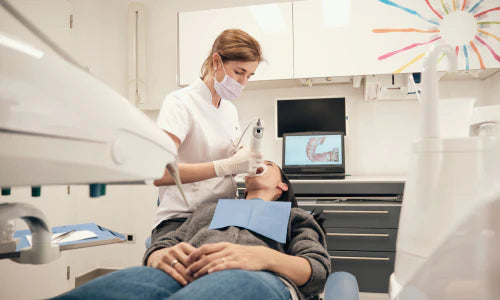
A proper Online Assessment gives the clinical team far more information about tooth positions and how the arches relate to one another. Depending on the provider and the case, additional dental records may also be needed before treatment is recommended.
This matters because some of the factors that make treatment complicated are not obvious when looking at a smile from the front.
A person might have relatively straight-looking front teeth but a significant bite issue. Another person may have noticeably crowded front teeth while still having movements that are comparatively predictable.
The second smile can look "worse" while being the more straightforward aligner case. That is one of the counter-intuitive realities of orthodontic treatment.
Do Complex Cases Take Longer?
Usually, but not automatically.
A mild case requiring limited movement will generally need fewer stages than a case involving extensive alignment and bite correction. Complex treatment may also have a greater likelihood of needing refinements because more movements must occur successfully and in the correct sequence.
Treatment time, however, is not determined by the label alone.
It can also depend on how consistently the patient wears the aligners, how the teeth biologically respond, whether aligners continue fitting correctly, and whether additional corrections become necessary.
Most clear aligner systems rely on patients wearing their aligners for the prescribed number of hours each day. Inconsistent wear can cause the teeth to fall behind the planned movement, even in an otherwise mild case.
Are Clear Aligners Only Suitable for Mild Cases?
No. Modern clear aligner treatment can manage considerably more than minor cosmetic straightening.
Many moderate cases and selected complex cases can be treated with aligners when properly planned and supervised. Attachments, elastics, IPR, staged movements, and refinements have expanded what clear aligner therapy can accomplish.
There are still limits.
Certain severe bite problems, skeletal discrepancies, impacted teeth, or movements that cannot be predictably achieved with aligners may require alternative or combined orthodontic treatment. In some situations, braces may offer better control.
The right question therefore isn't simply, "Are clear aligners good for complex cases?"
It is: Can clear aligners predictably achieve the movements required in this particular case?
That answer depends on the individual diagnosis.
Does Age Change Aligner Case Complexity?
Adults and teenagers can both be candidates for clear aligner treatment, but age can affect treatment considerations.
Teenagers may still be experiencing dental or jaw development, which can influence planning. Adults generally have completed growth, and their dental history may include crowns, implants, missing teeth, gum issues, or previous orthodontic treatment.
An implant, for example, does not move orthodontically like a natural tooth. Its position may therefore affect how surrounding teeth can be rearranged.
Age alone does not make someone a mild or complex case. Oral health, tooth position, bite, previous dental work, and the movements required matter more.
Why Accurate Case Classification Matters
Knowing whether a case is mild, moderate, or complex helps establish realistic expectations.
It can influence the anticipated number of aligners, treatment duration, monitoring requirements, possible refinements, and whether additional orthodontic techniques are necessary.
More importantly, accurate assessment prevents treatment from becoming purely cosmetic.
The goal is not simply to make the visible front teeth look straighter. A responsible treatment plan considers the whole dental relationship and whether the proposed movements are appropriate for that person's teeth and bite.
If you are considering Smileie, the starting point is determining what your teeth actually require rather than trying to classify your case from photographs or another person's treatment experience.
FAQs About Aligner Case Types
How do I know if my aligner case is mild or complex?
You usually cannot determine this accurately from appearance alone. A dental assessment looks at crowding, spacing, rotations, bite relationships, tooth movement requirements, and available space. A case that appears mild in a photograph can sometimes require more advanced treatment mechanics.
Can clear aligners fix moderate cases?
Yes, many moderate cases can be treated successfully with clear aligners. Treatment may involve attachments, IPR, bite correction, or additional refinement aligners depending on the movements required. Suitability should be determined from your individual dental records rather than from a general severity label.
Can clear aligners treat complex cases?
Some complex cases can be treated with clear aligners, particularly with careful planning and appropriate orthodontic techniques. Others may be better managed with braces or a combination of treatments. The deciding factor is whether the required movements can be achieved safely and predictably.
How long do mild aligner cases take?
Mild cases often require less treatment time because fewer or smaller movements are needed, but there is no universal timeline. Treatment length depends on the exact movements prescribed, the aligner system, biological response, and how consistently the aligners are worn.
Do moderate aligner cases need attachments?
They often can, but not every moderate case requires them. Attachments are small tooth-coloured shapes placed on selected teeth to help aligners apply force in specific directions. Their use depends more on the movements required than on the mild, moderate, or complex label itself.
Does severe crowding mean I can't get clear aligners?
Not automatically. Some significant crowding can be managed with aligners if adequate space can be created and the required movements are predictable. Severe crowding can also indicate a more complex case, so a professional assessment is needed to determine the appropriate approach.
Are braces better than aligners for complex cases?
It depends on the specific orthodontic problem. Clear aligners can handle many advanced movements, but braces may provide greater or more predictable control for certain complex tooth movements and bite corrections. The best treatment is the one suited to the mechanics of your individual case, rather than the appliance you prefer in isolation.

Latest Blog
-
 Sep 22, 2026
At-Home Impression Kit vs. In-Person 3D Scan: Which Should Encino Residents Choose?
Learn More -

-

-


