



 USA
USA Canada
 UK
UK Italy
Italy Sweden
 Australia

At-Home Clear Aligners vs In-Clinic Treatment: Which Fits Your Life Better?

Most people comparing these two options are really asking one thing: Which one will actually work for my life?
Maybe you're juggling work, family, travel, and everything else that fills your calendar. Or perhaps you've finally decided it's time to straighten your teeth, but you're unsure whether you need regular orthodontic appointments or if an at-home option can deliver the results you're looking for.
This comparison is for adults who want a realistic answer, not marketing claims. If you're deciding between at-home clear aligners vs in-clinic treatment, understanding how each fits your lifestyle, budget, and dental needs is far more important than choosing whichever sounds more convenient.
By the end of this guide, you'll have a clear idea of which approach makes the most sense for you.
What's the Difference Between At-Home and In-Clinic Clear Aligners?
For most adults with mild to moderate alignment concerns, at-home clear aligners provide a more convenient and affordable experience while still delivering predictable results through remote dental supervision. In-clinic treatment remains the better choice for complex orthodontic cases that require hands-on adjustments and closer monitoring.
Understanding the Core Difference
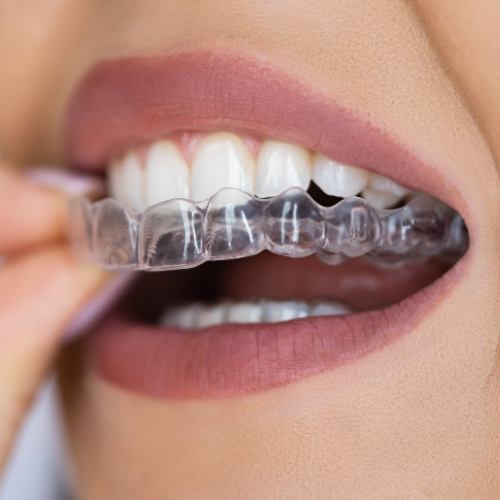
At a glance, both options aim to do the same thing: gradually move your teeth into better alignment using a series of custom-made clear aligners.
The biggest difference isn't the aligners themselves. It's how your treatment is managed.
With at-home clear aligners, your treatment begins with an impression kit or digital scan. A licensed dental professional reviews your case remotely, creates a personalized treatment plan, and monitors your progress through scheduled virtual check-ins.
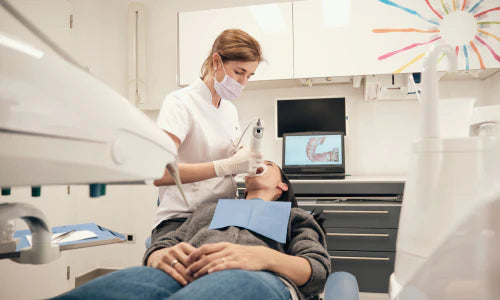
With in-clinic treatment, every stage, from scans to adjustments and progress reviews, takes place in a dental office. Your orthodontist can make changes during appointments whenever needed.
Neither approach is automatically better. The right choice depends on how much supervision you need and how your lifestyle fits around treatment.
Quick Comparison
Factor |
At-Home Clear Aligners |
In-Clinic Treatment |
|
Cost |
Usually lower |
Usually higher |
|
Office Visits |
Minimal or none |
Regular appointments |
|
Supervision |
Remote dental monitoring |
In-person monitoring |
|
Best For |
Mild to moderate cases |
Moderate to complex cases |
|
Lifestyle Convenience |
Very high |
Moderate |
|
Treatment Flexibility |
Easy for busy schedules |
Fixed appointment schedule |
|
Adjustments |
Planned remotely |
Immediate chairside adjustments |
The table gives a quick overview, but the details matter.
Cost: Looking Beyond the Sticker Price
Cost is often the first comparison people make, but it's worth looking at the complete picture.
In general, at-home invisible braces tend to cost significantly less than in-clinic treatment because they eliminate many of the overhead costs associated with repeated office visits.
Many providers also offer monthly payment plans, making treatment easier to fit into a household budget. If you're comparing costs in detail, reviewing Smileie's Pricing page can help you understand what is typically included before making a decision.
In-clinic treatment typically comes with a higher overall investment. That extra cost often reflects regular appointments, additional diagnostic tools, and the ability to make in-person adjustments throughout treatment.
If your case is straightforward, paying considerably more doesn't necessarily mean you'll achieve better results. If your case is complex, however, that additional supervision may be well worth it.
Convenience Can Be a Bigger Factor Than People Expect
This is where many adults begin leaning toward one option over the other.
Life doesn't usually slow down just because you've decided to straighten your teeth.
Professionals who travel frequently, parents with packed schedules, college students, and people living far from orthodontic offices often find that at-home treatment fits naturally into everyday life. Progress is monitored remotely, reducing the need to rearrange work meetings or family commitments around appointments.
In-clinic treatment asks for a greater time commitment. Regular visits are necessary so your orthodontist can monitor progress and make adjustments when required.
For some people, that's reassuring.
For others, it becomes one of the biggest reasons treatment gets delayed.
Supervision: Different Doesn't Mean Less Professional
One of the biggest misconceptions in the remote aligners vs office treatment discussion is that remote care means no professional oversight.
That's not how reputable at-home systems work.
Licensed dental professionals review your case before treatment begins and continue monitoring your progress throughout your aligner journey. Communication happens digitally rather than inside a clinic.
In-clinic treatment simply provides a different type of supervision.
Your orthodontist can physically examine your teeth, identify issues immediately, and make real-time adjustments during appointments. This level of direct involvement becomes especially valuable for more complicated orthodontic needs.
Treatment Time Depends More on Consistency Than Location
Many people assume one option is always faster. The reality is more nuanced.
Whether you choose home-based or office-based treatment, your results depend heavily on wearing your aligners for the recommended number of hours each day.
Missing wear time delays progress regardless of where your treatment is managed.
Simple alignment cases often finish within similar timelines across both treatment models. More complex movements, however, frequently require in-clinic treatment and naturally take longer to complete.
Which Cases Are Suitable?
Not every smile needs the same level of treatment.
At-home clear aligners are generally designed for mild to moderate concerns such as:
-
Mild crowding
-
Small gaps
-
Minor spacing issues
-
Slight tooth rotation
-
Relapse after previous orthodontic treatment
In-clinic treatment is often the better recommendation for:
-
Significant bite problems
-
Severe crowding
-
Teeth requiring complex movement
-
Cases involving jaw alignment
-
Situations that may require additional orthodontic procedures
Choosing the right option isn't about preference alone. It's about selecting the level of care your teeth actually need.
Lifestyle Matters More Than Most People Realize
Straightening your teeth isn't just a dental decision. It's something you'll live with every day for months.
If frequent appointments feel manageable and you'd rather have direct access to your orthodontist, in-clinic treatment offers that reassurance.
If flexibility matters more because of work, travel, or family responsibilities, at-home treatment often integrates more naturally into your routine.
This is one reason so many adults have shifted toward remote treatment over the past few years. They aren't necessarily looking for the cheapest option, they're looking for one they can realistically stick with.
Who Is Each Option Best For?
If you're still undecided, think about yourself rather than the products.
At-home clear aligners may be the better choice if you:
-
Have mild to moderate alignment concerns
-
Want fewer appointments
-
Travel frequently
-
Work long or unpredictable hours
-
Prefer managing treatment from home
-
Want a lower overall treatment cost
Smileie is one example of this approach, combining remote dental monitoring with custom treatment plans designed for eligible adults.
In-clinic treatment may suit you better if you:
-
Have significant bite correction needs
-
Require complex tooth movement
-
Feel more comfortable with regular face-to-face appointments
-
Want your orthodontist to make adjustments during treatment
-
Have dental conditions that require closer observation
Neither profile is better.
The goal is matching the treatment to the person, not forcing every patient into the same solution.
The Verdict: Which Fits Your Life Better?
For the average adult with mild or moderate alignment concerns, at home vs in clinic clear aligners isn't really about choosing between quality and convenience.
It's about choosing the level of care your smile actually requires.
If your case qualifies for remote treatment, at-home clear aligners usually offer the strongest balance of affordability, flexibility, comfort, and professional supervision. They remove many of the practical barriers that stop adults from starting treatment in the first place.
If your orthodontic needs are more complex, in-clinic treatment remains the safer and more effective path because it allows for hands-on care throughout the process.
The best decision isn't the one with the most appointments. It's the one that's appropriate for your teeth and realistic for your lifestyle.
Frequently Asked Questions
1. Are at-home clear aligners as effective as in-clinic treatment?
For mild to moderate alignment issues, yes. When prescribed and monitored appropriately, at-home treatment can deliver excellent results. Complex orthodontic problems generally require in-person care.
2. Are at-home clear aligners cheaper than in-clinic treatment?
In most cases, yes. At-home treatment usually costs less because it involves fewer office visits while still including professional oversight. Total pricing varies depending on the provider and treatment complexity.
3. Which treatment takes less time?
Treatment length depends more on your individual case and how consistently you wear your aligners than where treatment takes place. Simple cases often finish within similar timeframes.
4. How do I know if I'm suitable for at-home clear aligners?
The only reliable way is to have your smile evaluated by a licensed dental professional. An assessment determines whether your alignment concerns can be safely treated remotely.
5. Can at-home clear aligners fix bite problems?
Some minor bite issues may be treatable remotely, but significant bite corrections usually require in-clinic orthodontic treatment where closer monitoring is possible.
6. Do I still receive professional supervision with remote treatment?
Yes. Reputable at-home providers include treatment planning and progress monitoring by licensed dental professionals. The difference is that communication happens virtually instead of through frequent office visits.
7. Which should I choose if I have a busy schedule?
If your case qualifies, at-home clear aligners are generally the better fit for busy professionals, parents, and frequent travelers because they minimize the need for in-person appointments while maintaining professional oversight.

Latest Blog
-
 Sep 22, 2026
At-Home Impression Kit vs. In-Person 3D Scan: Which Should Encino Residents Choose?
Learn More -

-

-


