



 USA
USA Canada
 UK
UK Italy
Italy Sweden
 Australia

At-Home Clear Aligners vs In-Office Treatment: Pros, Cons, and Cost

Most people comparing at-home and in-office aligners are really trying to answer a practical question: Do I need regular visits to a dental office to straighten my teeth, or can I get the results I want with remote treatment?
For adults and professionals with mild to moderate alignment concerns, convenience and cost can make at-home treatment appealing. In-office treatment offers something different: more direct clinical supervision and the ability to manage cases that may require hands-on procedures.
The right choice comes down to more than price. Your case complexity, schedule, comfort with remote treatment, and need for in-person care all matter.
At Home vs In Office Aligners: What's the Difference?
At-home clear aligners are designed around remote treatment. Depending on the provider and treatment model, you may complete an impression kit or scan, receive a treatment plan, and have your teeth aligners delivered for use at home. Progress is then managed remotely according to the provider's process.
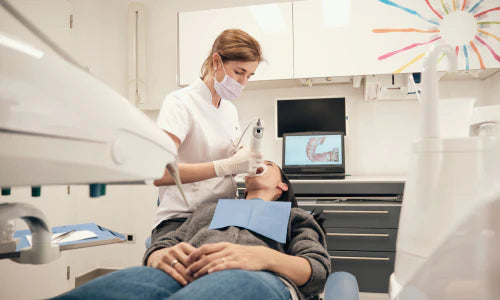
In-office aligner treatment involves regular appointments with a dentist or orthodontist. Your provider can examine your teeth in person, take scans or X-rays when clinically appropriate, perform procedures needed for treatment, and make adjustments as your teeth move.
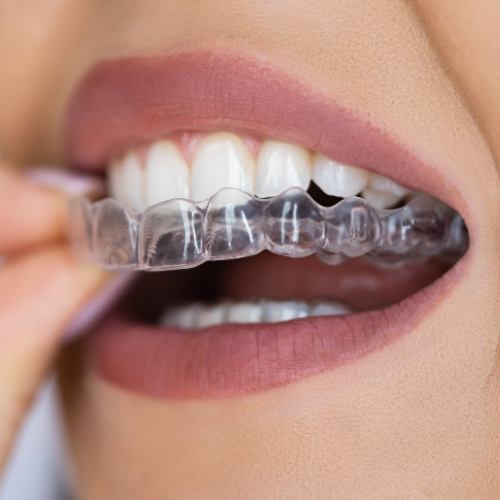
Both approaches use clear, removable trays rather than brackets and wires. The biggest difference is therefore not what the aligners look like. It's how your treatment is assessed, supervised, and adjusted.
What's better: at-home or in-office clear aligners?
For many adults with straightforward mild to moderate alignment concerns, at-home clear aligners can offer a more convenient and affordable route to a straighter smile. In-office treatment is generally the stronger choice when tooth movement is complex, hands-on procedures are needed, or frequent face-to-face clinical supervision is important.
At-Home vs In-Office Aligners at a Glance
Factor |
At-Home Clear Aligners |
In-Office Treatment |
|
Cost |
Usually lower |
Usually higher |
|
Appointments |
Few or no routine office visits |
Regular in-person visits |
|
Convenience |
High |
Depends on appointment schedule |
|
Clinical supervision |
Primarily remote |
Direct, in-person |
|
Complex cases |
More limited |
Better suited |
|
Appearance |
Clear and discreet |
Clear and discreet |
|
Hands-on adjustments |
Limited |
Available when required |
The table makes the basic differences easy to see, but some of these factors deserve a closer look before you decide.
Cost: How Much Do At-Home and In-Office Aligners Cost?
Cost is often the biggest reason people start researching at home vs in office aligners.
Remote aligners generally cost less because the treatment model can reduce the number of physical appointments and some of the overhead associated with office-based care. Some providers also offer monthly payment options, making the upfront expense easier to manage.
The cost of in-office aligners is usually higher because you're also paying for regular access to a dental professional, office visits, monitoring, and any hands-on procedures included in your treatment.
That extra expense isn't necessarily poor value. For someone with a complicated bite or tooth movement that needs closer intervention, paying for in-person care may be completely justified.
If your case is suitable for remote treatment, however, paying substantially more for regular office visits may not provide the same additional value.
Smileie's Pricing page can be used to compare the cost of its at-home treatment with quotes you receive for office-based care.
Convenience and Lifestyle
This is where the difference becomes particularly noticeable for busy adults.
Traditional in-office treatment means fitting appointments into your schedule. Even relatively short visits can involve travel, time away from work, parking, childcare arrangements, or rearranging other commitments.
Remote aligners remove much of that friction. Treatment is designed to be managed primarily from home, so there are fewer reasons to reorganize your day around dental appointments.
That convenience does come with responsibility. You need to follow your treatment instructions, wear your aligners for the prescribed amount of time, switch trays as directed, and complete any required remote progress checks.
Someone who prefers regular face-to-face accountability may actually find in-office care easier to follow.
Supervision: Remote Monitoring vs In-Person Care
Clinical supervision is one of the strongest arguments for in-office treatment.
Seeing a provider in person allows them to physically examine your teeth, gums, bite, and treatment progress. If something isn't moving as expected, they can assess the issue directly. Office-based treatment can also incorporate attachments and other procedures when necessary to achieve specific tooth movements.
Remote treatment takes a different approach. Rather than routinely visiting an office, communication and progress monitoring are handled remotely according to the provider's treatment protocol.
For straightforward cases, that can be a practical model. It isn't automatically appropriate for every patient.
If you have significant bite problems, impacted teeth, substantial crowding, active dental problems, or movements that require hands-on intervention, an in-person evaluation may be the better starting point.
Which Option Can Treat More Complex Cases?
In-office treatment wins this category.
Clear aligners can accomplish sophisticated tooth movements, but some cases benefit from attachments, elastics, interproximal reduction, additional imaging, or other procedures performed by a dental professional.
Remote treatment is generally best suited to cases that can be managed without frequent physical intervention.
That distinction is important because choosing teeth aligners shouldn't simply be about finding the least expensive treatment. The goal is to choose the least intensive option that can appropriately address your individual alignment needs.
For someone with a straightforward cosmetic alignment concern, remote care may be enough. For significant bite correction or complex tooth movement, in-office care offers capabilities that at-home treatment may not.
Comfort, Appearance, and Everyday Life
There isn't a major winner here.
Both options use clear aligners, sometimes casually described as invisible braces, although aligners and braces are technically different treatments. The trays are designed to be discreet and removable.
You can generally remove aligners when eating and drinking as instructed, then clean your teeth before putting them back in. This can make meals and oral hygiene simpler than with fixed braces.
Both types can also cause temporary pressure or tenderness when you begin a new set of trays. That's part of the tooth-moving process rather than something unique to either treatment model.
The more meaningful lifestyle difference is how you interact with your provider: remotely or through office appointments.
Does In-Office Treatment Work Faster?
Not automatically.
Treatment time depends on how far your teeth need to move, the types of movements required, your treatment plan, and how consistently you wear your aligners.
A simple case treated remotely could finish sooner than a complicated case treated in an office. Likewise, a complex case may progress more predictably with in-person procedures that aren't available through an at-home model.
Be cautious about choosing either option based purely on an advertised treatment time. A shorter estimate only matters if it is realistic for your teeth.
What Happens After Treatment?
Whichever route you choose, finishing your last aligner isn't the end of the process.
Teeth have a natural tendency to shift after orthodontic movement. Retainers are commonly used after treatment to help maintain the new position.
Before comparing prices, check whether retainers are included or sold separately, how often they may need replacement, and what post-treatment support is available.
A cheap initial price can become less attractive if important long-term costs weren't included in the comparison.
Who Are At-Home Clear Aligners Best For?
At-home treatment makes the most sense for someone whose alignment needs are suitable for remote care and who values flexibility.
A typical candidate might be an adult with mild to moderate spacing or crowding who doesn't want frequent office appointments. Remote treatment can also appeal to professionals, parents, frequent travelers, and budget-conscious buyers who would prefer to manage much of the process from home.
You should also be comfortable following instructions independently. Aligners only work when they're worn as directed.
Smileie is one example of this at-home approach, but suitability should come before brand or price. The first question should always be whether remote treatment makes sense for your teeth.
Who Is In-Office Aligner Treatment Best For?
In-office treatment is the stronger option when complexity or direct supervision outweighs convenience.
That can include people with more significant bite issues, difficult tooth movements, cases requiring attachments or other procedures, or dental circumstances that need closer examination.
It's also a sensible choice for someone who simply feels more comfortable seeing a provider face to face.
You don't need to have a complicated case to prefer office treatment. Some people value regular appointments and direct access enough to accept the additional cost and time commitment.
The Verdict: Which Should You Choose?
For the typical adult comparing these options because they want to correct a relatively straightforward alignment issue without adding frequent appointments or a high treatment cost, at-home clear aligners are likely the more practical starting point.
They can offer the main benefits people want from clear aligner treatment, discreet trays, removability, convenience, and a lower-cost model, without making routine office visits part of everyday life.
But that recommendation has a boundary.
If your case involves substantial crowding, bite correction, complicated tooth movements, existing dental concerns, or procedures that need to be performed in person, in-office treatment is the better choice even if it costs more. The extra clinical access is valuable when your treatment actually requires it.
So don't choose between remote aligners and clinic-based treatment based on price alone. Start with suitability. Once you know that remote treatment is appropriate for your case, convenience and cost become much more meaningful reasons to choose it.
If you're unsure where your case falls, an Online Assessment is the logical next step before committing to either treatment route.
FAQs About At-Home vs In-Office Aligners
Are at-home aligners cheaper than in-office aligners?
Generally, yes. At-home treatment can cost less because the model reduces routine office visits and associated overhead. Compare the full treatment price, including retainers and any additional fees, rather than looking only at the advertised starting cost.
Do at-home clear aligners work as well as in-office aligners?
They can work well for appropriately selected cases that don't require significant hands-on intervention. In-office treatment has an advantage for complex movements because a provider can examine progress directly and perform additional procedures when needed.
How much do in-office clear aligners cost?
The price varies considerably based on the provider, location, case complexity, treatment duration, and what's included in the plan. In-office treatment generally costs more than remote treatment, so ask for a complete quote that includes appointments, refinements, retainers, and other potential charges.
Are remote aligners suitable for crowded teeth?
They may be suitable for some mild to moderate crowding, but crowding varies greatly in complexity. Significant crowding or cases requiring additional procedures may be better managed through in-office treatment.
Is at-home aligner treatment faster than in-office treatment?
Not necessarily. Treatment length depends more on the amount and complexity of tooth movement and how consistently you follow the prescribed wear schedule than on whether monitoring happens remotely or in an office.
Can in-office aligners treat cases that at-home aligners can't?
Yes, in-office treatment can be more appropriate for complex cases because a dental professional can perform hands-on procedures and monitor difficult movements directly. That doesn't make office treatment necessary for every patient, but it gives the model a wider range of treatment options.
Which should I choose: at-home or in-office aligners?
Choose at-home aligners if your case is suitable for remote care and your priorities are convenience, fewer appointments, and lower cost. Choose in-office treatment if your case is complex, requires hands-on procedures, or you want regular face-to-face supervision.

Latest Blog
-
 Sep 22, 2026
At-Home Impression Kit vs. In-Person 3D Scan: Which Should Encino Residents Choose?
Learn More -

-

-


