



 USA
USA Canada
 UK
UK Italy
Italy Sweden
 Australia

How Much Do Clear Aligners Cost in Houston, Texas?

If you’ve been thinking about straightening your teeth, there’s usually one question that comes before everything else: How much is this actually going to cost me?
That question matters even more when you start comparing options in Houston. One provider quotes one price, another gives you a completely different number, and some won’t tell you much until you’ve already booked a consultation.
So rather than pretending there’s one universal price, it helps to understand what you’re actually paying for, what changes the cost, and where clear aligners fit compared with traditional orthodontic treatment.
How Much Do Clear Aligners Cost in Houston?
Clear aligner costs in Houston vary based on the provider, treatment complexity, treatment length, and whether care is delivered in person or remotely. Traditional braces may cost roughly $3,000–$7,000, while in-office clear aligner treatment can often reach $4,000–$8,000. Remote clear aligner treatment may cost less because it reduces recurring office visits and associated overhead.
Your actual cost can only be determined after your teeth and treatment needs have been assessed.
Why Clear Aligner Prices in Houston Vary So Much
Most people reach this point after looking at several websites and wondering why nobody seems to give the same answer.
The reason is fairly simple: you're not just paying for pieces of clear plastic. You're paying for the assessment, treatment planning, professional oversight, the number of aligners required, and, in traditional treatment models, the cost of repeated office appointments.
A person with mild spacing between a few front teeth may need a very different treatment plan from someone with crowding across both arches.
That difference affects both treatment time and cost.
What Do Traditional Braces Cost in Houston?
Traditional metal braces in Houston can commonly fall somewhere around $3,000 to $7,000, depending on the case and provider.
The final amount can be influenced by how long you need treatment, the complexity of the tooth movement, the orthodontic practice you choose, and what is included in the quoted fee.
Braces can be a very good option, particularly for more complicated orthodontic cases. Their higher cost isn't necessarily a sign that you're being overcharged. You're paying for a treatment model that involves fixed appliances and regular in-person supervision.
For someone who needs that level of treatment, it may be worth it.
For someone with a relatively straightforward case, however, there may be more affordable ways to straighten their teeth.
What About In-Office Clear Aligners?
In-office clear aligner treatment can cost roughly $4,000 to $8,000 in some cases.
Again, there isn't one Houston-wide price. Part of what you're paying for is the traditional orthodontic infrastructure around the treatment: the clinic, staff, recurring appointments, professional chair time, and ongoing in-person monitoring.
That model appeals to people who want frequent face-to-face appointments.
But a common concern we hear from adults is that they don't necessarily want to spend more time driving across Houston for orthodontic appointments if their case can be managed with fewer in-person visits.That's where remote-first clear aligner treatment becomes worth comparing.
Why Remote Clear Aligners Can Cost Less
The biggest difference isn't necessarily the aligner itself. It's how the treatment is delivered.
Smileie uses a remote-first process. You begin with an online assessment and, if you're eligible, provide the records needed for treatment planning through an impression or scan option.
Your treatment can then be planned and managed without requiring the same schedule of recurring office visits associated with traditional orthodontic care.
Reducing those in-person overhead costs can make the overall treatment model more affordable.
That doesn't mean cheaper should automatically equal better.
The real question should be: Am I getting an appropriate treatment plan, professional oversight, and support for my particular case at a price that makes sense?
That's a much better comparison than simply choosing whichever website displays the lowest number.
What Actually Determines Your Clear Aligner Cost?
Several factors can influence what you'll ultimately pay.
1. How Much Tooth Movement You Need
Someone trying to close a small gap between their front teeth isn't starting from the same place as someone with significant crowding.
Generally, more complicated movement requires more planning and potentially more aligner stages.
2. Whether One or Both Arches Need Treatment
Your upper teeth and lower teeth need to work together.
While treatment needs differ from person to person, whether movement is required in one or both arches can affect the scope of the plan.
3. How Long Treatment Takes
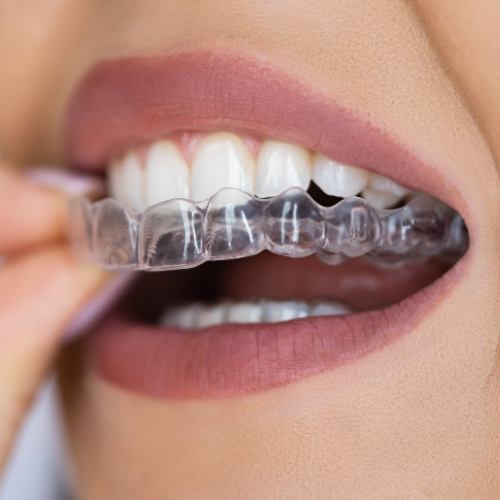
Clear aligners work through a planned sequence of trays that gradually move your teeth.
A relatively simple treatment may require fewer stages. A more involved case may require a longer sequence.
More treatment generally means more resources.
4. How Complex Your Bite Is
This is an important one because straight-looking teeth aren't the whole story. Your bite matters too.
Some mild-to-moderate alignment problems can be suitable for clear aligners, while more significant bite or jaw-related problems may need traditional in-person orthodontic treatment.
That's why an assessment should happen before anyone promises you a particular treatment, or a particular price.
5. What's Included in the Quoted Price
Two prices that look very different at first aren't always covering the same things.
Before choosing a provider, find out exactly what the quoted amount includes. Ask about treatment planning, aligners, professional oversight, support during treatment, and any potential additional costs.
The cheapest advertised price isn't particularly useful if several things you need are charged separately later.
What's the Cheapest Way to Straighten Teeth in Houston?
It's tempting to search for the cheapest clear aligners available and stop there.
But when you're talking about permanently moving teeth, the lowest price shouldn't be the only goal.
A better goal is finding the lowest reasonable cost for treatment that's actually appropriate for your case. For some people, that may be remote clear aligner treatment. For others, especially those with more complex orthodontic needs, the right answer may be braces or another form of in-person care. One of the most expensive mistakes you can make is paying for a treatment that wasn't suitable for you in the first place.
How Do You Find Out What You'll Actually Pay?
You need someone to look at your case.
Smileie's process starts with a free online assessment. This initial step helps determine whether your teeth appear suitable for clear aligner treatment before you commit to moving forward.
If you're eligible, you'll then complete the records needed to create your treatment plan.
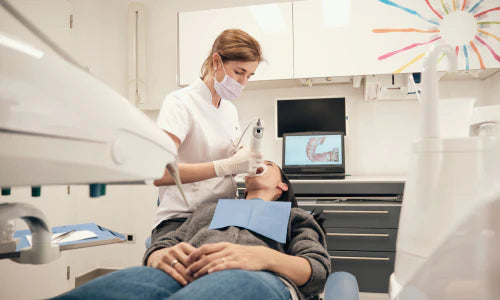
For Houston residents, that can include an in-person scan option through Smileie's Houston partner location on Gessner Road, or an at-home impression kit if you'd rather complete the process remotely.
Not sure which makes more sense for you? We've compared the two approaches in At-Home Impression Kit vs. In-Person 3D Scan: Which Should Houston Residents Choose?
This is also where you'll start getting away from generic internet price ranges and toward understanding what treatment would actually involve for your teeth.
Can You Pay for Clear Aligners Monthly?
For many people, affordability isn't simply about the total treatment price.
It's about what comes out of the bank account each month. Smileie offers payment options that can break the treatment cost into more manageable payments rather than requiring the entire amount upfront.
Before choosing any payment plan, look at the total amount you'll pay, not just the advertised monthly figure.
A low monthly payment can sound attractive, but the full treatment cost is still the number that matters when you're comparing providers.
Can Insurance, FSA, or HSA Help?
Possibly. Some dental insurance plans include orthodontic benefits that may contribute toward eligible clear aligner treatment. Coverage varies significantly between plans, so you shouldn't assume your policy covers treatment until you've checked.
Eligible FSA or HSA funds may also be usable for orthodontic treatment, depending on your circumstances and plan requirements.
If you have access to any of these benefits, it's worth checking before assuming you'll need to cover the entire treatment cost yourself.
Clear Aligners vs. Braces: Don't Compare Price Alone
Price matters. But it shouldn't be separated from how treatment will fit into your life.
Braces are fixed, highly established, and can handle cases that aren't appropriate for remote clear aligner treatment. The tradeoff is that they're visible and generally involve regular appointments.
Clear aligners are removable and much less noticeable. They can also fit more easily around work, meals, travel, and social events.
But they require discipline. If you're supposed to wear your aligners most of the day and regularly leave them sitting in their case, your treatment isn't going to behave the way it was planned.
If you're deciding between the two rather than simply comparing prices, read Clear Aligners vs. Braces: What's Best for Houston Adults?
The Houston Factor: Convenience Has a Cost Too
There's another cost people rarely include in their comparison: time.
An appointment itself may only take 20 or 30 minutes. But if you live in Houston, you know that's not necessarily a 30-minute commitment.
Add traffic on the Loop, Beltway 8, or the drive from one side of the city to another, parking, waiting, and getting back to work, and recurring appointments can take a meaningful chunk out of your day.
That doesn't mean in-person treatment is bad. Sometimes it's exactly what a case requires.
But if you're eligible for a treatment model that requires fewer trips, convenience becomes part of the value you're paying for too.
You’ve decided you’d like straighter teeth. Maybe you’ve even spent a few evenings comparing clear aligners, braces, and different treatment options.
Then you get to the part that makes the decision harder: What is this actually going to cost?
If you’re searching for clear aligner costs in Houston, you’ll find numbers all over the place. Some providers advertise a low starting price. Traditional orthodontic offices may quote several thousand dollars. Others won’t give you much of an answer until you schedule a consultation.
The frustrating part is that none of those numbers mean much until you understand what’s included.
So rather than focusing on the cheapest advertised price, it’s more useful to look at what typically drives clear aligner costs in Houston, how aligners compare with braces and in-office treatment, and how to find out what your own treatment could cost.
How Much Do Clear Aligners Cost in Houston?
Clear aligner costs in Houston vary based on the provider, treatment complexity, treatment length, and how care is delivered. Traditional braces may cost around $3,000–$7,000, while in-office clear aligner treatment can often range from $4,000–$8,000. Remote-first clear aligner treatment may cost less because it reduces the need for recurring in-office appointments and associated overhead.
Those ranges are useful for comparison, but they aren't a personal quote. Your teeth, bite, treatment needs, and provider ultimately determine what you'll pay.
Why Is There Such a Big Difference in Clear Aligner Prices?
A common concern we hear is, "If they're all clear aligners, why can one treatment cost thousands more than another?"
Because you're not really paying for plastic trays.
You're paying for everything required to determine where your teeth are now, plan how they should move, manufacture the aligners, oversee the treatment, and support you through the process.
With traditional orthodontic treatment, you're also paying for repeated appointments, clinic staff, chair time, and the overhead involved in operating a physical practice.
A remote-first model removes some of those expenses.
That doesn't automatically make one approach better than another. It simply means that two providers can offer teeth-straightening treatment using very different delivery models—and therefore have very different costs.
What Do Traditional Braces Cost in Houston?
Traditional metal braces in Houston can generally cost somewhere around $3,000 to $7,000, depending on the provider and complexity of treatment.
There are good reasons people still choose them.
Braces give an orthodontic professional a high degree of control over tooth movement and can be appropriate for cases that may be too complicated for remote clear aligner treatment. They're fixed to your teeth, so there's also no need to remember to put them back in after lunch.
The tradeoff is fairly obvious.
They're visible, they can come with food restrictions, and treatment typically involves regular in-person appointments.
For someone who needs more complex orthodontic correction, those compromises may be completely worthwhile. But if your case can be treated with clear aligners, it's reasonable to compare the cost and lifestyle differences before deciding.
How Much Does In-Office Clear Aligner Treatment Cost?
In-office clear aligner treatment in Houston can often fall around $4,000 to $8,000, depending on the case and provider.
Part of that cost comes from the treatment itself. Part comes from how the treatment is delivered.
Regular clinic appointments mean you're paying for access to a physical practice, staff, professional chair time, and continued face-to-face monitoring.
Some people genuinely prefer that.
Others look at their work schedule, family commitments, and Houston traffic and wonder whether they really want to make that trip every few weeks.
That's one of the reasons remote-first clear aligner treatment has become an alternative worth considering.
Why Can Remote Clear Aligners Be More Affordable?
The basic idea is surprisingly simple: reduce the amount of physical infrastructure required to deliver treatment.
Smileie's process begins remotely with an online assessment. If you're a suitable candidate, you move on to the records needed to create your treatment plan, using either an at-home impression option or an available in-person scan option.
Much of the remaining process can then happen remotely.
That means you're not paying for the same schedule of recurring office visits built into a traditional orthodontic treatment model.
For someone living or working around Houston, there's another saving that's harder to put on an invoice: time.
A 20-minute appointment isn't really a 20-minute appointment when you have to leave work, drive across town, find parking, wait, attend the appointment, and drive back.
Remote treatment doesn't make sense for every orthodontic case. But when you're an appropriate candidate, reducing unnecessary visits can make treatment both more convenient and more affordable.
What Actually Affects the Cost of Your Clear Aligners?
This is where generic price comparisons become less useful.
Two people in Houston can choose the same type of treatment and still have different needs.
How Complex Is Your Case?
Minor spacing or crowding is very different from a substantial bite problem.
Generally, more complicated tooth movement requires a more involved treatment plan. Some complex cases may not be appropriate for remote clear aligners at all and may need in-person orthodontic care.
That's why a provider should evaluate your case before telling you what's appropriate.
How Much Movement Is Required?
Clear aligners move teeth gradually through a planned series of trays.
If only relatively small movements are required, the treatment plan may be shorter. More extensive movement can require additional stages.
Treatment isn't priced simply by counting crooked teeth. Your teeth need to move together in a planned way while maintaining a functional bite.
Do Both Upper and Lower Teeth Need Treatment?
Some people initially focus on one area because that's where they notice the cosmetic problem.
Maybe it's a gap between two upper teeth or crowding along the bottom.
But orthodontic treatment considers how the upper and lower teeth fit together. The scope of treatment can therefore depend on whether movement is required across both arches.
How Long Will Treatment Take?
Treatment length varies.
More involved cases can require more aligner stages and a longer treatment period, which may affect overall cost.
Be cautious about choosing treatment solely because someone promises an unusually fast result. Teeth need to move in a controlled way; faster isn't automatically better.
What's Actually Included?
This is one of the most overlooked parts of comparing affordable clear aligners.
Suppose Provider A looks cheaper than Provider B.
Before deciding, find out whether both prices include the same things.
Look at what's included in the assessment, treatment planning, aligners, professional review, support, and any other parts of treatment that may affect your final cost.
The number that matters isn't necessarily the number on the advertisement.
It's the amount you'll realistically pay to complete appropriate treatment.
What's the Cheapest Way to Straighten Teeth in Houston?
There's nothing wrong with wanting an affordable option.
Orthodontic treatment is a meaningful expense, and most people have other things competing for the same money.
But "cheapest" needs some context when you're permanently changing the position of your teeth.
A very low price isn't much of a saving if the treatment isn't appropriate for your case or if important parts of the process aren't included.
A better question is: What's the most affordable and appropriate treatment for my teeth?
For someone with a relatively mild or moderate case, remote clear aligners may offer a lower-cost alternative to traditional in-office treatment.
For someone with significant bite problems or more complicated orthodontic needs, traditional braces or in-person orthodontic care may still be the better investment.
Knowing which group you're in should come before shopping purely on price.
How Can You Find Out Your Actual Clear Aligner Cost?
Start by finding out whether you're a candidate.
Smileie begins with a free online assessment designed to evaluate whether your case may be suitable for clear aligner treatment.
If you're eligible, the next stage involves getting accurate records of your teeth so a treatment plan can be developed.
Houston residents may have the option of completing that step through an in-person scan on Gessner Road or using an at-home impression kit, depending on what's more convenient.
If you're wondering which route makes more sense, we've broken down the differences in At-Home Impression Kit vs. In-Person 3D Scan: Which Should Houston Residents Choose?
Once your case has been properly evaluated, you can make decisions based on your actual treatment needs rather than a generic price range you found online.
Can You Pay for Clear Aligners Monthly?
For a lot of people, the real question isn't "Can I afford the total price?"
It's "Can I comfortably fit this into my monthly budget?"
Smileie offers payment options that can allow treatment costs to be divided into more manageable payments rather than necessarily paying the entire amount upfront.
When comparing clear aligner payment plans, however, don't look at the monthly figure alone.
Check the total treatment price and any financing terms that apply. A smaller monthly payment can be useful for budgeting, but you should still understand the complete amount you'll be paying.
Can Insurance, FSA, or HSA Help With Clear Aligner Costs?
They may. Some dental insurance plans include orthodontic benefits that can potentially contribute toward eligible clear aligner treatment. Coverage varies considerably, though, so it's worth checking the details of your own plan instead of assuming aligners are either covered or excluded.
Depending on eligibility and plan rules, FSA or HSA funds may also be usable toward qualifying orthodontic expenses.
If you have access to these benefits, check them before calculating what treatment will cost you out of pocket.
Even partial coverage can change the affordability equation.
Is It Worth Paying More for In-Person Treatment?
Sometimes, yes. This is an important distinction because the goal shouldn't be to convince everyone that remote treatment is automatically better.
If you have a complicated bite, significant crowding, or another issue that needs closer in-person management, paying for traditional orthodontic treatment may make perfect sense.
Some people also simply feel more comfortable having regular face-to-face appointments.
But if your case is suitable for remote clear aligners and you don't particularly value repeated clinic visits, paying thousands more for an in-office model may be harder to justify.
It comes down to what your teeth require and what level of convenience and supervision you prefer.
Don't Forget the Cost of Your Time in Houston
Houston adds one factor that doesn't usually appear on an orthodontic quote.
Traffic. If you've ever tried to cross the city around rush hour, you already know that a "quick appointment" can take up a surprisingly large part of your day.
For someone working near the Galleria, Downtown, the Medical Center, Westchase, or farther out, repeated orthodontic appointments can mean rearranging work, sitting in traffic, and giving up hours over the course of treatment.
You shouldn't choose dental treatment based on traffic alone.
But when two clinically appropriate options are available, convenience is a legitimate part of the comparison.
Remote-first treatment can reduce the number of times your schedule has to revolve around an orthodontic office.
Clear Aligners or Braces: Which Gives You Better Value?
Value isn't the same thing as price.
Braces can offer excellent value for someone whose orthodontic needs require the control of fixed appliances.
Clear aligners can offer better value for someone with an appropriate case who prioritizes discretion, removability, and fewer in-person visits.
The right comparison therefore isn't simply: Which one costs less?
It's: Which treatment gives me what my teeth actually need without making me pay for things I don't particularly need or value?
The Bottom Line on Clear Aligner Costs in Houston
If cost has been stopping you from looking seriously at clear aligners, don't assume they're automatically out of your budget.
Traditional braces in Houston may run around $3,000–$7,000, while some in-office clear aligner treatments can reach roughly $4,000–$8,000. Remote-first treatment can potentially reduce costs by removing much of the recurring in-office overhead.
But the lowest price on Google shouldn't make the decision for you.
Your case complexity, treatment length, what's included, professional oversight, convenience, and payment options all matter.
Most importantly, get an answer based on your teeth, not someone else's average.
Start with Smileie's free online assessment to find out whether clear aligner treatment may be appropriate for you and what the next step would look like.
Frequently Asked Questions
1. How much do clear aligners cost in Houston, TX?
Clear aligner prices vary depending on your case, treatment length, provider, and treatment model. The best way to know your actual cost is to have your teeth assessed first.
2. Are clear aligners cheaper than braces in Houston?
They can be. Remote-first clear aligners may cost less than traditional braces or in-office aligner treatment because they can reduce recurring clinic visits and associated overhead.
3. What affects the price of clear aligners?
Case complexity, the amount of tooth movement required, treatment length, and what's included in the treatment package can all affect the final price.
4. Can I pay for clear aligners monthly?
Payment options may allow you to spread treatment costs across manageable monthly payments. Always compare the total amount payable as well as the advertised monthly payment.
5. Does dental insurance cover clear aligners?
Some dental insurance policies include orthodontic benefits that may contribute toward eligible clear aligner treatment. Coverage depends on your specific insurance plan.
6. Can I use FSA or HSA funds for clear aligners?
Eligible orthodontic treatment may qualify for FSA or HSA spending depending on your plan and circumstances. Check with your plan administrator before starting treatment.
7. How do I find out exactly what my clear aligners will cost?
Start with an assessment of your teeth and treatment needs. Smileie's free online assessment can help determine whether you may be a suitable candidate before you move further into the treatment process.

Latest Blog
-
 Sep 22, 2026
At-Home Impression Kit vs. In-Person 3D Scan: Which Should Encino Residents Choose?
Learn More -

-

-


