




 USA
USA Canada
 UK
UK Italy
Italy Sweden
 Australia

Clear Aligners for Gaps Between Teeth: What Treatment Typically Covers

You notice the space most in photos. Maybe it’s between your two front teeth, or perhaps several smaller gaps have become more obvious over time. You’ve thought about fixing it, but the question isn’t simply whether you want straighter teeth. It’s whether clear aligners can actually close the gaps you have.
That distinction matters.
Spacing is one of the reasons adults consider clear aligners, but not every gap has the same cause or requires the same treatment. Some spaces are relatively straightforward to move together. Others involve tooth size, missing teeth, gum health, or bite issues that need a closer look before anyone can tell you what’s realistically achievable.
Here’s what you should know before deciding whether aligners make sense for your smile.
Can Clear Aligners Close Gaps Between Teeth?
Clear aligners for gaps can gradually move appropriately selected teeth into positions that reduce or close spaces between them. They commonly help with mild to moderate spacing, but suitability depends on the size and cause of the gaps, your bite, gum health, and the overall movement required to create a stable result.
Why Do Gaps Between Teeth Happen?
A gap between teeth is often called a diastema. The most noticeable example is a space between the upper front teeth, although spacing can appear almost anywhere in the mouth.
Sometimes the explanation is simple: the teeth are relatively small compared with the available space in the jaw. In other cases, spacing can be associated with missing teeth, tooth shape, tooth position, or the tissue between the upper lip and gums.
There can also be more complicated reasons. Gum disease, for example, can affect the structures supporting the teeth and contribute to unwanted movement or new spaces developing.
That’s why the first question shouldn’t be, “How quickly can I close this gap?” It should be, “Why is this gap here?”
Understanding the cause helps determine whether teeth aligners alone are appropriate or whether another dental issue should be addressed first.
What Types of Gaps Can Clear Aligners Typically Treat?
Most people reach this point expecting a simple yes-or-no answer. In reality, suitability depends on the whole smile rather than the appearance of one space.
Clear aligners may be suitable when there are small or moderate spaces between otherwise healthy teeth and the required movements fall within what aligner treatment can predictably manage. They can also be useful when several teeth are slightly spaced rather than there being one isolated gap.
Treatment becomes more individual when spacing is associated with significant bite problems, missing teeth, unusually shaped teeth, substantial tooth movement, or dental and gum health concerns.
For that reason, two people with gaps that look almost identical in a selfie can receive very different treatment recommendations.
An Online Assessment is the sensible starting point because it allows the complete tooth positions and bite to be evaluated rather than judging treatment from the visible gap alone.
How Do Gap Teeth Aligners Actually Work?
Clear aligners don’t simply squeeze two teeth together.
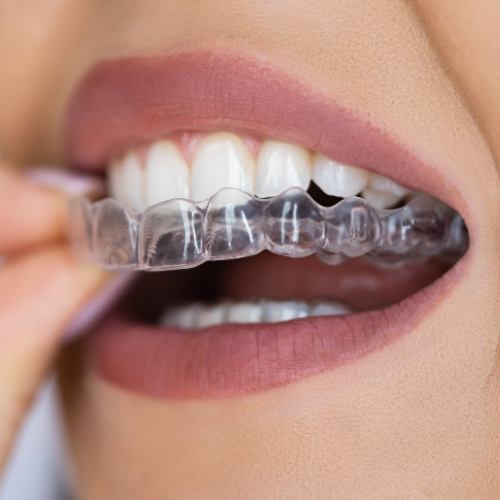
A treatment plan maps a sequence of controlled tooth movements. You wear a series of custom-made trays, with each stage designed to move certain teeth gradually toward their planned positions.
Depending on your case, this may mean moving the teeth directly beside the gap, redistributing space across several teeth, or making other movements so the final alignment and bite work together.
This is an important detail because closing the visible space isn’t the only goal. The teeth need to finish in positions that make sense together.
You can see the broader treatment journey on Smileie’s How It Works page, including what happens before aligners are produced.
How Long Does It Take to Close Teeth Gaps?
A common concern we hear is, “It’s only one gap. Shouldn’t it be quick?”
Sometimes a small spacing case does require fewer movements than more complex alignment. But the width of the visible gap doesn’t tell you everything about treatment time.
The number of teeth that need to move, the distance they need to travel, your bite, the treatment plan, and how consistently you wear the aligners can all affect the timeline.
Someone with one noticeable front gap may still need movement elsewhere to create a balanced result. Another person with several small spaces could have a relatively straightforward plan.
The useful timeline is therefore the one based on your own assessment, not a general estimate you saw online.
Will the Gap Stay Closed After Treatment?
This is one of the most overlooked questions in spacing treatment.
Teeth can move after orthodontic treatment. Once a gap has been closed, retention is typically an important part of maintaining the new positions. That usually means following the recommended retainer schedule after active treatment ends.
People sometimes focus so heavily on reaching the final aligner that retention feels like an afterthought. It shouldn’t.
If you’re comparing invisible braces for spacing, ask what happens after the movement is complete as well as what happens during treatment. A good treatment decision considers the long-term result, not just the day the gap disappears.
When Might Clear Aligners Not Be Enough?
There are situations where closing a space involves more than orthodontic movement.
For example, if a tooth is naturally undersized, moving the surrounding teeth may improve the spacing but may not create the ideal proportions on its own. Some cases may benefit from cosmetic dental treatment alongside or after orthodontic movement.
Missing teeth can create a different decision. Depending on the situation, the goal may be to close the available space or position the surrounding teeth appropriately for future restorative dental work.
Active gum problems are another reason treatment may need to wait. Moving teeth without addressing underlying periodontal concerns could be inappropriate.
And some complex bite or movement requirements may be better managed with in-person orthodontic care.
A trustworthy assessment should be willing to tell you that. The point is not to make everyone fit the same treatment model; it’s to determine whether the model fits the person.
What Should You Look for Before Choosing Treatment?
Price matters, especially when you’re paying out of pocket. But comparing treatments solely by the number on the checkout page can leave important questions unanswered.
Look at what the quoted price actually covers. Consider the assessment process, treatment planning, aligners, support during treatment, and what happens if your case needs further attention. Smileie’s Pricing Page information can help you understand what is included before making a commitment.
You should also feel comfortable with how your eligibility is determined. Be cautious of any experience that seems to promise a result before enough information has been gathered to understand your teeth and bite.
The best outcome isn’t necessarily the cheapest or fastest option. It’s the treatment that is appropriate for the problem you actually have.
Clear Aligners for Gaps: What Results Should You Expect?
If you’re suitable for treatment, the goal is typically to progressively reduce the planned spaces while improving the overall alignment of the teeth.
What you shouldn’t expect is a guarantee that every gap can be completely closed with invisible braces, regardless of its cause. Teeth don’t exist independently of your gums, jaw, bite, and neighboring teeth.
A realistic treatment plan should show what movements are intended and help set expectations before you commit.
That can be reassuring if you’ve spent years looking at the same space in the mirror. Instead of guessing whether aligners could work, you can make the decision based on your actual teeth.
Making the Decision Based on Your Teeth
If the gap has bothered you for years, it’s understandable to want a clear answer before spending money or committing to months of treatment.
Start with suitability rather than the sales pitch. Find out what caused the spacing, which teeth would need to move, what result is realistically expected, and how that result will be maintained afterward.
If clear aligners are appropriate for your case, you can move forward knowing what treatment is actually trying to accomplish. And if they aren’t, finding that out before paying for treatment is equally valuable.
FAQs About Clear Aligners for Gaps
Can clear aligners completely close gaps between teeth?
They can completely close many suitable spacing cases, particularly when the gaps and required tooth movements are within the scope of aligner treatment. Whether complete closure is appropriate depends on the cause of the spacing, tooth positions, bite, and dental health.
How long do clear aligners take to close gaps?
Treatment time varies according to the amount of spacing and all the tooth movements required, not just the size of the most visible gap. Your individual treatment plan is the best source for a realistic timeline.
How much do clear aligners for gaps cost?
Cost depends on the provider, treatment model, complexity, and what is included in the package. When comparing prices, check whether assessment, treatment planning, aligners, support, and post-treatment retention are included or charged separately.
Are clear aligners good for a gap between the two front teeth?
They may be a good option for many front-tooth gaps, but the reason for the space needs to be considered first. An assessment can determine whether moving the teeth together is appropriate and whether other tooth or bite movements are also necessary.
Can clear aligners fix gaps caused by missing teeth?
It depends on the treatment goal. Aligners may sometimes close space or reposition teeth to prepare for restorative treatment, but missing-tooth cases often require coordinated dental planning rather than aligners alone.
Are clear aligners better than braces for gaps?
Neither option is automatically better. Clear aligners offer a removable and discreet approach for many suitable spacing cases, while braces or other in-person orthodontic treatment may be preferable when movements or bite problems are more complex.
Can gaps come back after clear aligner treatment?
Yes, teeth can shift after treatment, which is why retention matters. Following the recommended retainer routine helps maintain the positions achieved during treatment.

Latest Blog
-
 Sep 22, 2026
At-Home Impression Kit vs. In-Person 3D Scan: Which Should Encino Residents Choose?
Learn More -

-

-


