



 USA
USA Canada
 UK
UK Italy
Italy Sweden
 Australia

How Clear Aligners Fit Seamlessly Into Modern American Lifestyles

Clear aligners fit modern American lifestyles because they’re removable, discreet, and flexible. You can eat what you want, maintain your routine, and straighten your teeth without interrupting work, social life, or travel.
You’re in a meeting. Someone cracks a joke, the room laughs, and you do too, but just a little guarded. Not because you don’t want to smile, but because you’re thinking about your teeth.
That moment, small but real, is where most people start considering clear aligners.
Not because they suddenly want “perfect teeth,” but because they want something that fits into their life without drawing attention, slowing them down, or forcing big changes.
So the real question isn’t just “Do clear aligners work?”
It’s: “Will this actually fit into my everyday routine?”
Why Lifestyle Fit Matters More Than Ever
In the U.S., daily life moves fast, long work hours, social commitments, travel, workouts, and everything in between. Traditional braces often feel like a mismatch for that pace.
Clear aligners, on the other hand, are designed around flexibility. They don’t ask you to change your lifestyle. They adapt to it.
Invisible in the Moments That Matter
Most people don’t worry about how their teeth look all the time. It’s specific moments:
-
Presenting at work
-
First dates
-
Weddings or events
-
Photos that stick around forever
That’s where invisible braces daily life really makes a difference.
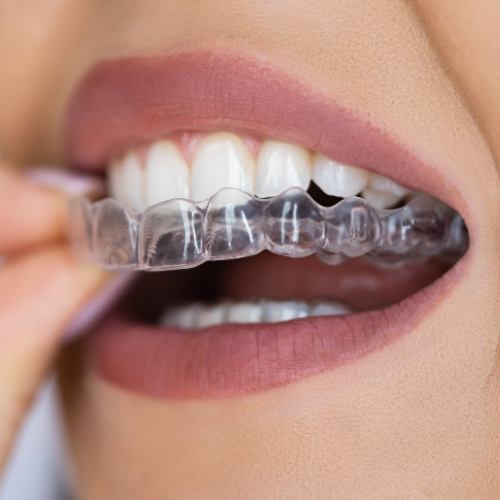
Clear aligners are subtle enough that most people won’t notice them unless you point them out. You don’t have to explain anything. You don’t have to feel self-conscious mid-conversation. It’s orthodontic treatment without the social trade-off.
Eating, Coffee, and Real-Life Habits
One of the biggest decision points people have is simple:
“Will I have to give up things I enjoy?”
With traditional braces, the answer is often yes. With aligners, it’s different. You remove them before eating.
That means:
-
No food restrictions
-
No awkward eating adjustments
-
No worrying about something getting stuck
Coffee? Still fine. Just remove, drink, rinse, and reinsert. It’s a small habit shift, not a lifestyle overhaul.
Workdays Stay Normal
Whether you're in an office, working remotely, or constantly on calls, convenience aligners are built to stay out of your workflow.
No emergency orthodontist visits for broken brackets
No visible hardware during video calls
No interruptions during presentations
Most adjustments happen gradually and quietly in the background.
If anything, the biggest “effort” is remembering to wear them consistently, which quickly becomes routine.
Travel Without Complications
For many Americans, travel is part of life, business trips, vacations, weekend getaways.
Clear aligners are travel-friendly because:
-
No in-person adjustments are required
-
You carry your next sets with you
-
No need to find a local orthodontist mid-trip
This is especially relevant with at-home systems like Smileie, where the process, from impression to delivery, is designed to be remote. You can even explore how the process works through their How It Works page when considering this route.
The Cost vs. Value Conversation
Let’s be honest, cost is always part of the decision.
But people don’t just ask, “How much does it cost?”
They ask, “Is this worth it for my lifestyle?”
Clear aligners often feel more “worth it” because they:
-
Save time (fewer appointments)
-
Reduce disruption
-
Fit around your schedule
If you’re evaluating options, it helps to look at a transparent breakdown like Smileie’s Pricing page to understand what you're actually paying for, and what you're not.
The Real Hesitation: Discipline
Here’s the part people don’t always talk about.
Clear aligners give you freedom, but that comes with responsibility.
You need to wear them 20–22 hours a day.
That raises real questions:
-
Will I forget to put them back in?
-
Will this feel like a hassle long-term?
For most people, the answer becomes clear within the first week. It turns into a habit, like wearing a watch or carrying your phone.
But it’s worth being honest with yourself. If you prefer something you don’t have to think about at all, fixed braces might feel easier.
Who Clear Aligners Work Best For
Clear aligners tend to be the right fit if you:
-
Value flexibility and control
-
Have a busy or unpredictable schedule
-
Want a discreet treatment option
-
Are comfortable maintaining small daily habits
They may not be ideal if you:
-
Prefer zero responsibility in treatment
-
Often forget routines
-
Need very complex orthodontic correction
Getting Started Without Overthinking It
A lot of people stay stuck in research mode. Reading reviews. Comparing options. Waiting for the “right time.” But the simplest next step isn’t committing, it’s just understanding your case.
That’s where a quick at-home assessment can help. Smileie offers a simple starting point through their scan/assessment process, which gives you a clearer idea of whether aligners even make sense for you. No pressure, just clarity.
Final Thought
Clear aligners work best when they don’t feel like a burden, and that’s exactly why they fit so well into modern American lifestyles. They let you improve your smile without putting your routine on hold.
If you’re exploring options, Smileie is one of the providers built around this kind of flexibility, offering a fully at-home process that keeps things simple and convenient.
At the end of the day, it’s about choosing something you can stick with comfortably, and that fits into your life, not the other way around.
FAQs
1. Do clear aligners affect daily speech?
There may be a slight adjustment period, but most people adapt within a few days and speak normally.
2. Can I wear aligners during workouts or sports?
Yes, they’re generally safe during workouts. For contact sports, using a mouthguard is still recommended.
3. How often do I need to switch aligners?
Typically every 1–2 weeks, depending on your treatment plan.
4. Will people notice I’m wearing aligners?
Most people won’t. They’re designed to be discreet and blend naturally with your teeth.
5. What happens if I forget to wear them for a few hours?
Occasional lapses aren’t a big issue, but consistent wear is key for staying on track.
6. Can I smoke or drink alcohol with aligners in?
It’s best to remove them. Smoking can stain aligners, and alcohol (especially colored drinks) can as well.
7. How do I know if I’m a good candidate?
A quick at-home assessment or consultation can help determine if aligners are suitable for your case.

Latest Blog
-
 Sep 22, 2026
At-Home Impression Kit vs. In-Person 3D Scan: Which Should Encino Residents Choose?
Learn More -

-

-


