



 USA
USA Canada
 UK
UK Italy
Italy Sweden
 Australia

Clear Aligners for Overbite: What a Typical Treatment Plan Includes

You may have noticed that your upper front teeth sit farther forward than you would like. Maybe it is most obvious in side-profile photos. Maybe your lower teeth seem almost hidden when you bite down. Or perhaps a dentist has mentioned an overbite, and now you are wondering whether clear aligners can actually change it.
The answer depends on what is causing the bite issue.
Many mild to moderate overbites can be improved with clear aligners, particularly when tooth position is a major part of the problem. More complex bite problems involving significant jaw discrepancies may require different orthodontic approaches.
Understanding that distinction before starting treatment matters. An overbite treatment plan is not simply about making the front teeth look straighter—it needs to consider how the upper and lower teeth meet.
Can Clear Aligners Fix an Overbite?
Clear aligners can correct many mild to moderate overbites by gradually changing the position and angle of the teeth. Treatment is planned as a sequence of controlled movements designed to improve both alignment and the way the upper and lower teeth meet. More severe or skeletal overbites may need in-person orthodontic treatment.
That last point is important because two people who appear to have similar overbites in a photograph may need very different treatment.
A teeth overbite describes the vertical overlap between your upper and lower front teeth. Some overlap is normal. The question is whether that overlap is excessive and, more importantly, why.
If the problem primarily comes from tooth positioning, clear aligners overbite treatment may be a practical option. If the relationship between the upper and lower jaws is the main cause, aligners alone may not provide the degree of correction needed.
What Does an Overbite Assessment Look At?
A good assessment does more than check whether your teeth are crooked.
The provider needs to understand the relationship between the upper and lower arches, how much the front teeth overlap, whether teeth are tilted or crowded, and whether there is enough room to make the movements required.
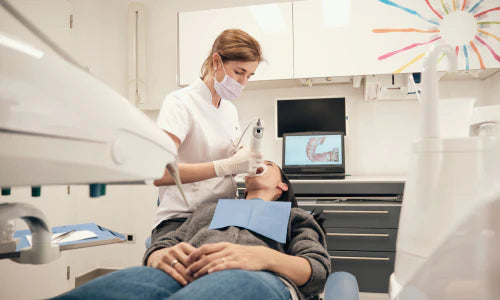
This is why photos, impressions, or digital scans are important. They provide information that cannot be gathered from a smile photo alone.
At Smileie, the Online Assessment and the 3D dental scan at the clinic stage helps you determine whether your case is appropriate for remote clear aligner treatment before an aligner plan moves forward.
A common concern we hear is, “My overbite does not look that severe—does that mean treatment will be easy?” Not necessarily. Appearance is only one part of the assessment. The mechanics needed to improve the bite matter more than how dramatic it looks in a photograph.
What a Typical Aligner Overbite Plan Includes
Once your case is considered suitable, the treatment plan maps out how your teeth are expected to move from their current positions toward the planned result.
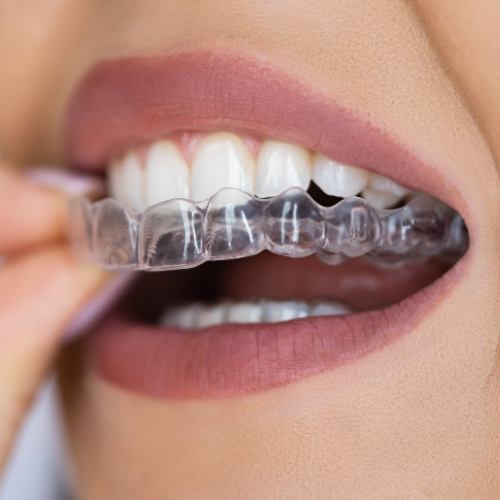
Instead of attempting the correction all at once, treatment is divided into stages. Each set of teeth aligners applies controlled pressure to selected teeth. You wear the aligners according to the prescribed schedule and progress through the sequence as directed.
With an overbite, the plan may involve more than simply straightening the visible front teeth. Certain teeth may need to move vertically, others may need their angle adjusted, and space may need to be managed so the upper and lower arches fit together more effectively.
That is one reason an aligner overbite plan can look different from a treatment plan designed purely for minor crowding.
The planned movements are also coordinated. Moving one tooth can change how it contacts a tooth in the opposite arch, so bite correction has to be considered throughout treatment rather than treated as a cosmetic finishing step.
You can see a broader overview of this process on Smileie's How It Works page.
How Long Does Overbite Correction With Aligners Take?
There is no single timeline that applies to every overbite.
A relatively mild case involving straightforward tooth movements may require less time than a case involving substantial bite correction, crowding, or several movements that have to happen in sequence.
Your treatment length can also depend on how consistently you wear the aligners. Clear aligners only apply their planned forces while they are seated properly over your teeth.
Most plans therefore require aligners to be worn for roughly 20–22 hours per day, removing them mainly for eating, drinking anything other than water, and oral hygiene.
This is one of the less obvious realities of overbite correction aligners: treatment planning can be excellent, but the aligners still need enough daily contact with the teeth to carry out that plan.
What Results Should You Realistically Expect?
People often approach overbite treatment with two goals: they want straighter teeth, and they want their bite to look better.
Those goals frequently overlap, but they are not identical.
For an appropriate case, clear aligners may improve the vertical relationship between the front teeth while also correcting spacing, crowding, or tooth angulation. Changes can make the smile appear more balanced and improve how the upper and lower teeth come together.
But clear aligners have limits.
If an overbite is primarily caused by the underlying jaw relationship rather than tooth position, an invisible braces bite fix may not be enough on its own. Significant skeletal discrepancies or complicated bite problems can require comprehensive in-person orthodontic evaluation and treatment.
A trustworthy provider should identify those limitations rather than promising that every overbite can be treated remotely.
Are Clear Aligners Different From Braces for an Overbite?
Both approaches move teeth, but they do so differently.
Traditional braces give an orthodontist substantial control over complicated tooth and bite movements and can be especially valuable for severe or complex cases. They also remain attached to the teeth throughout treatment, so compliance is less dependent on remembering to put an appliance back in.
Clear aligners are removable and much less noticeable. For adults with an appropriate mild to moderate case, that can make treatment easier to fit around work, meals, travel, and social situations.
The trade-off is responsibility.
Invisible braces need to be worn consistently. If they spend several hours each day sitting in their case, treatment may not track according to plan.
Neither option is automatically better. The right choice depends on the complexity of your overbite and the movements required to correct it.
What Happens if Your Teeth Do Not Track Exactly as Planned?
Teeth are biological structures, not pieces on a computer screen. Their response to orthodontic force can vary.
Sometimes a tooth does not move exactly as predicted. Sometimes the bite needs additional adjustment after the initial aligner sequence.
Depending on the treatment system and your individual case, this can lead to reassessment and potentially additional aligners or refinements.
This is something worth understanding before comparing providers based only on the advertised price. Ask what the package includes, what happens if your progress differs from the original simulation, and whether additional treatment stages are covered.
Smileie's Pricing Page information can help you understand what is included before committing to treatment.
Who Is Usually a Good Candidate?
Most people reach this point wanting a simple yes-or-no answer: “Will aligners work for my overbite?”
The most promising candidates generally have bite problems that can be addressed primarily through tooth movement, healthy teeth and gums, and the ability to follow the recommended wear schedule consistently.
Cases become less suitable for remote treatment as skeletal involvement and bite complexity increase.
That is why eligibility should come before purchasing aligners. The goal is not simply to qualify as many people as possible. It is to determine whether the treatment method matches the problem you actually have.
What Should You Check Before Starting?
Pay attention to what the provider promises.
Be cautious of treatment presented as though every overbite follows the same formula. A credible plan should be based on your individual tooth positions and bite rather than a generic expectation that wearing aligners will automatically correct everything.
You should also understand the expected treatment duration, daily wear requirements, what is included in the package, how progress is evaluated, and what happens if your teeth require additional correction.
The most useful question is not, “Can clear aligners fix overbites?”
It is, “Can clear aligners predictably treat my type of overbite?”
That is what an assessment is designed to answer.
FAQs About Clear Aligners and Overbite Treatment
Can clear aligners fix an overbite?
Yes, clear aligners can improve many mild to moderate overbites when tooth position is a major cause. Severe overbites or those caused primarily by jaw structure may require more comprehensive orthodontic treatment.
How long do clear aligners take to fix an overbite?
Treatment time depends on the severity of the overbite and the tooth movements required. Mild cases can be quicker, while more complicated bite corrections may require a longer sequence and potentially additional refinements.
How much do clear aligners for an overbite cost?
Cost varies depending on the provider, treatment complexity, and what the package includes. Compare the full treatment cost rather than only the starting price, particularly whether assessments, retainers, support, and possible refinements are included.
Am I eligible for clear aligners if I have an overbite?
Possibly. Mild to moderate dental overbites are often better candidates than severe bite problems caused by jaw structure, but eligibility can only be determined after your teeth and bite are assessed.
Are clear aligners or braces better for an overbite?
It depends on the complexity of the case. Clear aligners can work well for suitable mild to moderate cases, while traditional braces and in-person orthodontic treatment may offer greater control for complicated or severe bite corrections.
Will my overbite come back after clear aligner treatment?
Teeth can shift after any orthodontic treatment if retention instructions are not followed. Wearing retainers as prescribed helps maintain the corrected tooth positions and bite relationship.
Can Smileie clear aligners treat every type of overbite?
No clear aligner system is appropriate for every overbite. Smileie clear aligners are intended for cases that can be predictably managed with the treatment approach; more complex bite or jaw problems may require in-person orthodontic care.

Latest Blog
-
 Sep 22, 2026
At-Home Impression Kit vs. In-Person 3D Scan: Which Should Encino Residents Choose?
Learn More -

-

-


