




 USA
USA Canada
 UK
UK Italy
Italy Sweden
 Australia

Clear Aligners for Professionals: Why Invisible Beats Obvious

You are halfway through a client call when you catch your reflection on screen. Or maybe you are preparing for a presentation, an interview, or another week of back-to-back meetings and thinking about something you have put off for years: straightening your teeth.
The hesitation usually isn't whether you want a straighter smile. It's whether orthodontic treatment will become another visible part of your professional life.
For adults who spend their days speaking with clients, managing teams, presenting ideas, or simply working alongside other people, that concern is understandable. You may want to improve your smile without feeling as though your treatment announces itself every time you speak.
That's where clear aligners can make a meaningful difference. They aren't invisible in the literal sense, and they aren't right for every orthodontic problem. But for suitable cases, they offer a much more discreet way to straighten teeth while continuing with work, meetings, travel, and everyday life.
Why Are Clear Aligners for Professionals a Good Option?
Clear aligners for professionals offer a discreet way to straighten teeth without highly visible brackets or wires. Because the trays are transparent and removable, many adults can continue meetings, presentations, meals, and business travel with relatively little disruption while completing orthodontic treatment under an appropriate treatment plan.
Why Visibility Matters More at Work Than People Expect
A common concern we hear is, "Will people notice?"
Usually, that question isn't driven by vanity. It's about feeling comfortable in situations where communication and first impressions matter.
Traditional braces can be an effective treatment option, including for cases that require more complex tooth movement. But they are visually obvious. For an adult who regularly meets customers, attends conferences, records videos, or gives presentations, that visibility may be difficult to ignore.
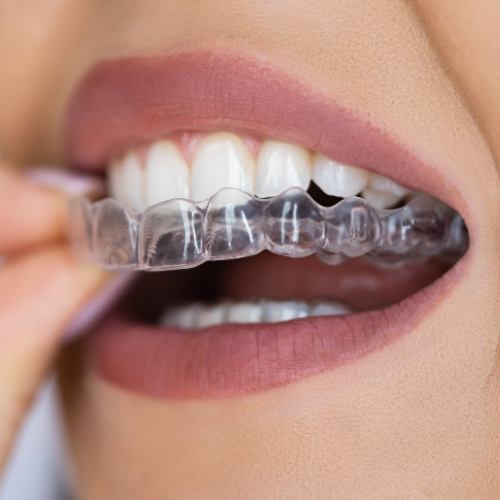
Clear aligners take a different approach. The trays fit closely over the teeth and are made from transparent material, making them considerably less noticeable during normal conversation.
Someone standing close to you may still see them. Attachments used in some treatment plans can also make aligners slightly more noticeable. "Discreet" is a more realistic description than "completely invisible."
For many professionals, though, discreetness is exactly what matters.
Clear Aligners vs. Traditional Braces in Professional Settings
The biggest difference during a working day isn't necessarily orthodontic effectiveness. It's how treatment fits into everything else you're doing.
Fixed braces stay on your teeth throughout meetings, meals, photographs, presentations, and social events. You don't have to remember to put them back in, which is a genuine advantage. They can also treat orthodontic situations that may not be suitable for remote or clear aligner treatment.
Clear aligners give you more flexibility.
If you're having lunch with a client, you remove the trays before eating. If you have an important presentation and feel particularly self-conscious, they can briefly be removed, although consistently meeting the recommended daily wear time remains essential for treatment to progress as planned.
That flexibility is one reason people searching for invisible braces at work often end up considering clear aligners.
But there is a trade-off: responsibility.
Because aligners are removable, they only work when you actually wear them. A busy schedule doesn't change that. If trays repeatedly spend hours sitting in a case because meetings, lunches, coffee breaks, and networking events get in the way, treatment may not track as intended.
What Does Aligner Office Life Actually Look Like?
Most people reach this point when they stop asking, "Can I wear aligners at work?" and start asking, "Will they annoy me all day?"
The first few days with a new set of teeth aligners can feel unfamiliar. You may notice pressure on your teeth, and some people temporarily become more conscious of their speech. For many, that awareness decreases as they adapt.
The bigger adjustment is routine.
Coffee at your desk requires more thought because aligners generally need to be removed for drinks other than plain water. Lunch means removing the trays, eating, cleaning your teeth as appropriate, and putting them back in. Long dinners or frequent snacking can make maintaining wear time more challenging.
After a while, this tends to become less of an event and more of a habit.
People who travel for work often find that keeping an aligner case and basic oral-care supplies in their work bag helps. The goal isn't to make your entire day revolve around treatment. It's to build a routine that keeps treatment moving without constantly thinking about it.
Meetings, Presentations, and Speaking With Aligners
If your job depends heavily on speaking, this may be your biggest concern.
There can be a short adjustment period. Because you're placing a thin layer of material over your teeth, certain sounds may initially feel slightly different. That doesn't mean you'll spend months struggling through presentations.
Practising conversation or reading aloud when you begin wearing a new set can help you become comfortable more quickly.
One mistake some people make is routinely removing their aligners whenever they need to speak in public. That may feel convenient, but doing it several times every working day can eat into the wear time your treatment depends on.
Unless there's a specific reason to remove them, becoming comfortable speaking while wearing them is usually the more practical long-term approach.
Discreet Orthodontics Isn't Only About Appearance
The appeal of discreet orthodontics goes beyond whether colleagues can see your treatment.
It's also about control.
Professionals often have calendars that change constantly. There may be an unexpected dinner, an important photograph, a conference, a flight, or a presentation that wasn't on the schedule a week ago.
Removable aligners give you some flexibility around those moments. That doesn't mean treatment becomes optional whenever work gets busy. It means treatment can often be managed around real life more naturally than a permanently visible appliance.
Smileie's How It Works page can help you understand the treatment process before deciding whether that level of responsibility fits your routine.
What About Cost?
Cost is often the point where interest becomes a real decision.
People sometimes assume discreet treatment automatically means paying a premium simply because the trays are less noticeable. In reality, clear aligner costs vary considerably depending on the provider, complexity of the case, what's included in the treatment package, and whether additional treatment is required.
Don't compare options based only on the advertised starting price.
Ask what the quoted amount actually includes. Look at treatment planning, aligners, support, refinements if applicable, retainers, and any other potential charges. Smileie's Pricing Page information can help you understand what's included before you make a commitment.
The cheapest number isn't necessarily the best value. The useful number is the one that reflects what you'll realistically need from beginning to end.
Are Clear Aligners Right for Every Professional?
No, and your job title has nothing to do with it.
Clear aligners can treat many cases involving spacing, crowding, and certain bite or alignment concerns, but suitability depends on your teeth and the complexity of the movements required. Some cases need a different type of orthodontic treatment or closer in-person management.
Your habits matter too.
If you know you'll struggle to wear aligners consistently, fixed braces may actually be easier because compliance isn't optional. Someone who constantly snacks or drinks coffee throughout the working day may also find the remove-clean-reinsert routine more demanding than expected.
The right question isn't simply, "Which treatment looks better?"
It's, "Which treatment can I realistically follow well enough to get the result I'm working toward?"
Starting Without Turning It Into a Major Project
One reason adults delay orthodontic treatment is that starting feels bigger than it needs to be.
You don't need to decide today that you're definitely going through treatment. First, you need to find out whether you're a suitable candidate and understand what treatment could involve for your particular teeth.
Smileie's Online Assessment process is designed to help establish that before you commit to treatment.
For professionals especially, that information matters. You can evaluate the expected treatment time, routine, cost, and likely outcome against your actual schedule rather than an idealised version of it.
If the plan fits, you move forward knowing what you're signing up for. If it doesn't, you've still made a more informed decision.
The advantage of clear aligners isn't that nobody will ever know you're straightening your teeth. It's that, for the right person and the right case, treatment doesn't have to become the most noticeable thing about you when you walk into the room.
FAQs About Clear Aligners for Professionals
Can you wear clear aligners at work?
Yes. Clear aligners are designed to be worn for most of the day, so work is normally part of your wear time. Their transparent appearance makes them a popular choice for people who regularly interact with colleagues, customers, or clients.
Are clear aligners noticeable during meetings?
They can be visible at close range, particularly if your treatment requires attachments, but they are generally much less obvious than metal brackets and wires. Most normal workplace conversations don't require you to remove them.
Do clear aligners affect your speech at work?
Some people notice a temporary change in speech when they first start wearing aligners. This often improves as the mouth adjusts, and practising speaking with the trays in can make presentations and meetings feel more natural.
How much do clear aligners for professionals cost?
There isn't a separate professional price; cost depends on the provider, treatment complexity, and what's included in the plan. Compare the total expected treatment cost rather than choosing solely by the lowest advertised price.
How long does clear aligner treatment take?
Treatment time varies according to the starting position of your teeth, the movements required, and how consistently you follow your treatment plan. Your assessment and proposed treatment plan should give you a more useful estimate for your individual case.
Can I remove clear aligners for presentations or client meetings?
Because aligners are removable, you can take them out briefly when necessary. However, repeatedly removing them for meetings can reduce daily wear time, so it's generally better to become comfortable speaking while wearing them.
Are clear aligners better than braces for working adults?
They can be better for adults who prioritise discretion and flexibility, but they're not automatically the better clinical option. Traditional braces may be more appropriate for certain complex cases or for people who don't want responsibility for maintaining aligner wear time.

Latest Blog
-
 Sep 22, 2026
At-Home Impression Kit vs. In-Person 3D Scan: Which Should Encino Residents Choose?
Learn More -

-

-


