




 USA
USA Canada
 UK
UK Italy
Italy Sweden
 Australia

Clear Aligners vs Ceramic Braces: Which Is Less Noticeable?

Most people comparing these two options aren't asking which one looks better in a brochure. They're wondering what other people will actually notice during a meeting, dinner, photo, date, or normal conversation.
For adults and professionals especially, appearance can be one of the biggest factors in choosing orthodontic treatment. Clear aligners and ceramic braces are both designed to be less noticeable than traditional metal braces, but they achieve that in very different ways.
If discretion is your main priority, there is a meaningful difference between them. But visibility isn't the only factor worth considering before you decide.
Clear Aligners vs Ceramic Braces: What's the Main Difference?
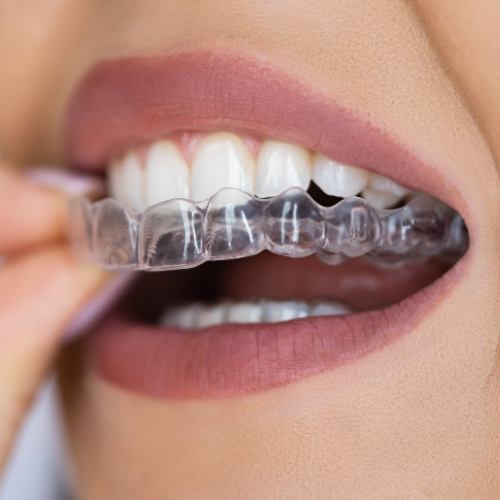
Clear aligners are removable, transparent trays that fit closely over your teeth and gradually move them according to a treatment plan. Because there are no brackets or wires across the front of the teeth, they tend to blend into your smile from normal conversational distances.
Ceramic braces work much like traditional braces. The difference is that the brackets are made from tooth-colored or translucent ceramic rather than highly visible metal. A wire still connects the brackets and remains fixed to your teeth throughout treatment.
That distinction affects more than appearance. It changes how you eat, clean your teeth, manage treatment each day, and how much responsibility you have for keeping treatment on schedule.
Which Is Less Noticeable: Clear Aligners or Ceramic Braces?
Clear aligners are generally less noticeable than ceramic braces because transparent trays fit closely over the teeth without visible brackets or a fixed wire. Ceramic braces are more discreet than metal braces, but their brackets and wires can still be seen at conversational distance, particularly in bright lighting and close-up photos.
For someone whose biggest concern is maintaining a natural-looking smile during treatment, clear aligners usually have the aesthetic advantage.
They aren't completely invisible. Someone standing close to you may notice the edges of the trays or slight reflections from the material. Certain treatment plans may also require small tooth-colored attachments that can make aligners easier to spot.
Ceramic braces are intentionally designed to reduce the classic metallic adult braces look. Their brackets can blend surprisingly well with natural teeth, particularly from farther away.
Up close, however, the individual brackets and connecting wire remain visible. That's why people searching for the least visible braces option often prefer clear aligners when their case is suitable for them.
Appearance in Everyday Life
The difference between invisible braces vs ceramic options becomes clearer in everyday situations.
During conversations, clear aligners typically attract less attention because there isn't a row of brackets breaking up the natural appearance of the teeth. In photos, they can also be difficult to notice unless the image is close or lighting reflects off the trays.
Ceramic braces are discreet rather than nearly invisible. They're often a major aesthetic improvement over metal brackets, but people who look directly at your teeth will usually be able to tell you're wearing braces.
There's another practical advantage with aligners: they're removable. You can take them out for eating and drinking anything other than water, although they need to be worn for the recommended daily time for treatment to progress properly.
Ceramic braces remain visible around the clock until treatment is completed.
Clear Aligners vs Ceramic Braces: Cost
Cost varies considerably depending on case complexity, treatment duration, provider, location, and what's included in the treatment package.
Ceramic braces are typically provided through an orthodontic office and may cost more than metal braces because of the ceramic materials used. Regular office appointments for adjustments are normally part of the treatment process.
Clear aligner pricing varies depending on whether treatment is primarily managed remotely or through frequent in-person visits. At-home clear aligner programs such as Smileie can reduce some of the overhead associated with repeated office visits, which can make treatment more accessible for appropriate cases.
When comparing prices, don't focus only on the advertised starting number. Check whether impressions or scans, aligners, professional review, refinements, retainers, and follow-up support are included.
You can review Smileie's Pricing page if you want to understand what's included before comparing the total cost with an orthodontic quote.
Convenience and Lifestyle
This is where the difference becomes especially noticeable day to day.
With ceramic braces, you don't have to remember to put anything back in. They're permanently attached, so treatment continues without depending on wear-time discipline. That can be a genuine advantage for someone who knows they would regularly forget their aligners.
The tradeoff is that fixed brackets affect eating and oral hygiene. Certain hard or sticky foods can damage braces, and cleaning around brackets and wires takes additional effort.
Clear aligners come out for meals, so there are fewer food restrictions. Brushing and flossing are also more familiar because you can remove the trays first.
But removability creates responsibility. If you repeatedly leave aligners out for too long, tooth movement may not progress as planned.
Comfort and Maintenance
Neither option is completely free from discomfort. Moving teeth requires controlled pressure, and some soreness is normal after changing aligner trays or having braces adjusted.
Clear aligners have smooth plastic surfaces, so there are no brackets or wire ends rubbing against the cheeks in the same way fixed braces sometimes can.
Ceramic brackets can occasionally irritate the inside of the mouth, particularly early in treatment. Brackets may also require repair if they're damaged.
Aligners have their own maintenance requirements. They need regular cleaning, and they should generally be removed before eating or drinking beverages that could stain or damage them.
Treatment Time and Results
There's no universal winner for treatment speed.
Treatment length depends far more on what needs to be corrected than whether the appliance is transparent or ceramic. Mild alignment cases may be relatively straightforward with clear aligners, while more complex bite or tooth-movement requirements may need longer treatment or a different orthodontic approach.
Ceramic braces have an important advantage here: because they're a fixed orthodontic appliance, they can be suitable for cases where continuous control of tooth movement is needed.
Clear aligner technology can address many common alignment concerns, but not everyone is an appropriate candidate for an at-home treatment model.
That's why an assessment matters more than choosing based purely on appearance.
Quick Comparison: Clear Aligners vs Ceramic Braces
Factor |
Clear Aligners |
Ceramic Braces |
|
Visibility |
Usually very discreet |
Less visible than metal braces, but brackets remain noticeable |
|
Removable |
Yes |
No |
|
Eating |
Removed for meals |
Some food restrictions |
|
Cleaning teeth |
Relatively straightforward |
Requires cleaning around brackets and wires |
|
Daily responsibility |
Requires consistent wear |
Works continuously once fitted |
|
Supervision |
Varies by treatment model |
Regular in-person orthodontic care |
|
Complex cases |
Suitability depends on the case |
Can accommodate a broader range of orthodontic needs |
|
Comfort |
Smooth trays; temporary pressure common |
Brackets and wires may cause irritation |
|
Cost |
Varies by provider and treatment model |
Varies by orthodontist and case complexity |
Who Are Clear Aligners Best For?
Clear aligners make the most sense for adults who place a high value on discretion and want treatment to interfere as little as possible with everyday appearance.
They can be particularly attractive if you regularly attend meetings, work face-to-face with customers, appear in photographs, or simply don't want fixed brackets on your teeth.
They're also a strong lifestyle fit for people who want to continue eating normally and prefer removing their appliance to brush and floss.
The important qualification is discipline. Clear aligners only make sense if you're willing to follow the prescribed wear schedule consistently.
Who Are Ceramic Braces Best For?
Ceramic braces are worth considering if you want a less conspicuous alternative to metal braces but need or prefer fixed orthodontic treatment.
They're especially useful for someone who doesn't want responsibility for remembering aligner wear. Once the braces are fitted, they're working continuously.
They may also be the better choice when the orthodontic problem requires movements that aren't appropriate for a particular clear aligner treatment model.
For these patients, accepting slightly greater visibility can be a sensible tradeoff for the level of treatment control they need.
Clear Aligners vs Ceramic Braces: Which Should You Choose?
If your case can be treated effectively with either option and your biggest concern is which treatment is less noticeable, clear aligners have the clearer advantage.
They don't place permanent brackets and wires across the front of your teeth, they're removable for meals, and they generally have less impact on the appearance of your smile during everyday interactions.
Ceramic braces shouldn't be dismissed simply because they're more visible. They're a valuable middle ground for people who need fixed orthodontic treatment but want something subtler than metal braces.
The deciding factor should ultimately be suitability. If you're considering clear aligners, completing an Online Assessment from Smileie can help determine whether your teeth and treatment goals are appropriate before you make the choice.
For the typical adult with a suitable mild-to-moderate case who prioritizes discretion, convenience, and flexibility, clear aligners are usually the stronger fit. If treatment complexity or difficulty staying compliant is the bigger concern, ceramic braces may be the smarter choice.
Frequently Asked Questions
Are clear aligners less noticeable than ceramic braces?
Usually, yes. Clear aligners cover the teeth with transparent trays, while ceramic braces still have individual brackets and a connecting wire. Aligners may still be visible at close range, especially if attachments are required.
Are ceramic braces cheaper than clear aligners?
Not necessarily. Pricing for both options varies according to treatment complexity, provider, location, and treatment duration. Compare the complete treatment price rather than assuming one appliance is automatically cheaper.
Do clear aligners work as well as ceramic braces?
Clear aligners can produce excellent results for appropriately selected cases. Ceramic braces may be preferable for certain complex orthodontic movements because they provide fixed, continuous control. An assessment is the best way to determine which approach suits your case.
Which takes longer, clear aligners or ceramic braces?
Neither treatment is automatically faster. Treatment time depends on the starting position of your teeth, bite correction required, treatment plan, and, in the case of removable aligners, how consistently they're worn.
Are clear aligners suitable for everyone?
No. Although clear aligners can treat many alignment concerns, some complex cases may require more comprehensive in-person orthodontic treatment. Suitability should be established before treatment begins.
Do ceramic braces stain or become more noticeable?
The ceramic brackets themselves are designed to remain discreet, but surrounding components can sometimes become more noticeable depending on materials, diet, and oral hygiene. Good cleaning habits are especially important with fixed braces.
Should I choose clear aligners or ceramic braces as an adult?
If discretion, removable treatment, fewer food restrictions, and lifestyle flexibility are your priorities, and your case is suitable, clear aligners will usually be the better fit. Ceramic braces may make more sense if you need fixed treatment, have a more complex case, or don't want to manage daily aligner wear.

Latest Blog
-
 Sep 22, 2026
At-Home Impression Kit vs. In-Person 3D Scan: Which Should Encino Residents Choose?
Learn More -

-

-


