




 USA
USA Canada
 UK
UK Italy
Italy Sweden
 Australia

Clear Aligners vs Metal Braces: Which Is Better for Adults in 2026?

Most adults comparing these two options are really trying to answer one question: Which one will straighten my teeth without making everyday life harder?
It's rarely just about getting straighter teeth anymore. You might be thinking about work meetings, social events, comfort, treatment cost, or simply whether you'll actually stick with the process. The right choice isn't always the one that moves teeth the fastest, it's the one you'll successfully complete.
Both clear aligners and metal braces are proven orthodontic treatments. The difference lies in how they fit into your lifestyle, the type of tooth movement required, and the level of supervision involved. Understanding those differences makes the decision much easier.
Which Is Better for Adults: Clear Aligners or Metal Braces?
For most adults with mild to moderate alignment concerns, clear aligners are often the better choice because they combine effective treatment with greater comfort, flexibility, and a discreet appearance. Metal braces remain the stronger option for complex orthodontic cases where maximum tooth control is required. The best choice depends on your clinical needs and your ability to follow treatment instructions.
At a Glance: Clear Aligners vs Metal Braces
Factor |
Clear Aligners |
Metal Braces |
|
Appearance |
Nearly invisible |
Highly visible |
|
Comfort |
Smooth plastic trays |
Metal brackets and wires |
|
Removability |
Yes |
No |
|
Eating |
Remove before meals |
Food restrictions apply |
|
Oral hygiene |
Easier brushing and flossing |
More time-consuming cleaning |
|
Best for |
Mild to moderate cases |
Moderate to complex cases |
|
Office visits |
Typically fewer |
Regular adjustment appointments |
|
Discipline required |
High (20–22 hours daily) |
Minimal patient compliance |
Visibility Matters More Than Many Adults Expect
For teenagers, braces may feel normal because many classmates have them. Adults often have different priorities.
If your work involves presentations, client meetings, interviews, or frequent social interactions, visible metal brackets may affect how confident you feel during treatment. While many adults wear braces without concern, others prefer a treatment that isn't immediately noticeable.
Clear aligners are designed to be discreet. Most people won't notice them unless they're looking closely. That subtle difference often becomes one of the biggest reasons adults choose aligners over traditional braces.
Appearance isn't about vanity. It's about feeling comfortable throughout a treatment that may last many months.
Comfort and Everyday Living
This is where daily experience begins to separate the two treatments.
Metal braces use brackets and wires that apply continuous pressure. Especially after adjustments, it's common to experience soreness, and brackets may occasionally irritate the inside of the cheeks or lips.
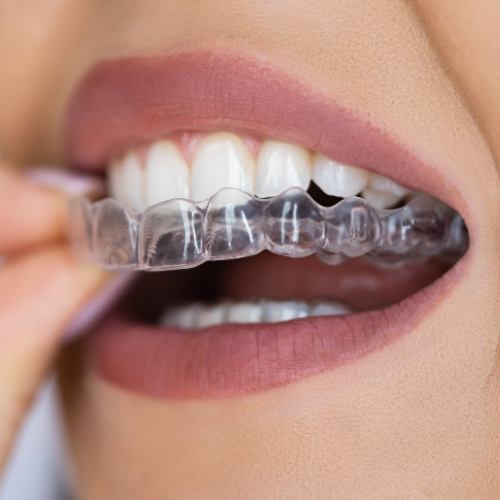
Clear aligners apply pressure too, they're moving teeth, after all, but many adults describe the experience differently. Instead of dealing with brackets, you're wearing smooth plastic trays that generally cause less irritation.
Lifestyle differences become noticeable almost immediately.
With braces, you'll need to avoid foods that can damage brackets, such as hard candies, popcorn, sticky sweets, and certain crunchy foods.
With clear aligners, you simply remove the trays before eating and enjoy your normal diet. After brushing your teeth, you place the aligners back in.
That flexibility is one of the reasons many working adults find aligners easier to live with.
Cost: Is One Really More Affordable?
Cost is often where assumptions don't match reality.
Traditional braces have long been viewed as the standard treatment, but modern clear aligners are available across a wide range of price points. Depending on treatment complexity, the overall investment may be similar or, in some cases, lower than braces.
Monthly payment plans have also made aligners more accessible for many adults.
Rather than comparing only the total price, it's worth looking at:
-
What's included in treatment
-
Whether retainers are part of the package
-
Follow-up care
-
Financing options
-
Any additional clinical visits that may be required
If affordability is one of your biggest concerns, reviewing the treatment pricing page before making a decision provides a much clearer picture than comparing headline numbers alone.
Treatment Time and Commitment
People naturally want the quickest route to straighter teeth.
Treatment time depends far more on your specific case than on the appliance itself.
Many adults with mild or moderate crowding complete clear aligner treatment within several months, while more complex cases, whether using braces or aligners, can take considerably longer.
The important difference is responsibility. Metal braces continue working around the clock because they can't be removed.
Clear aligners only work if they're worn consistently, typically for 20 to 22 hours each day.
For someone who frequently forgets routines or struggles with consistency, braces remove that responsibility entirely.
For someone who values flexibility and can stay disciplined, aligners usually fit daily life more comfortably.
Which Option Handles More Complex Cases?
This is one area where metal braces continue to have a genuine advantage.
Severe crowding, major bite problems, significant tooth rotations, and complicated orthodontic corrections often benefit from the precise control braces provide.
Orthodontists have decades of experience treating highly complex cases with fixed appliances.
Clear aligners have advanced significantly and can now address many moderate orthodontic concerns that previously required braces. However, they aren't the ideal solution for every patient.
That's why a professional evaluation matters.
A treatment Assessment helps determine whether your teeth are suitable for clear aligners or whether braces would likely deliver a better outcome.
Choosing the right treatment isn't about preference, it's about selecting the approach that matches your clinical needs.
Oral Hygiene During Treatment
Keeping your teeth clean becomes more challenging with braces.
Food can become trapped around brackets and wires, making brushing and flossing more time-consuming. Special cleaning tools are often recommended to maintain healthy gums throughout treatment.
Clear aligners simplify oral hygiene because they're removable.
You brush and floss normally before placing the trays back in, allowing many adults to maintain the same dental routine they had before treatment.
For people already committed to good oral hygiene, this can be a meaningful advantage over the course of many months.
Who Should Choose Clear Aligners?
Clear aligners are generally an excellent choice for adults who:
-
Have mild to moderate crowding or spacing
-
Want a discreet treatment option
-
Prefer fewer lifestyle restrictions
-
Can consistently wear aligners for 20–22 hours daily
-
Value flexibility around meals and social events
-
Want easier brushing and flossing during treatment
They suit professionals, parents, students, and anyone looking for a treatment that blends into everyday life rather than becoming the centre of attention.
Who Should Choose Metal Braces?
Metal braces may be the better fit for adults who:
-
Have complex orthodontic issues
-
Need significant bite correction
-
Prefer not having to remember wearing removable appliances
-
Are comfortable with visible braces
-
Require precise tooth movements that fixed appliances handle especially well
For certain clinical situations, braces remain the most predictable and effective solution.
The Verdict
For the average adult considering orthodontic treatment in 2026, clear aligners are usually the more practical choice.
Not because metal braces no longer work, they absolutely do, but because most adults today want treatment that fits around their lives rather than asking their lives to adapt around treatment.
If your case is mild to moderate and you're willing to wear your aligners consistently, you'll likely appreciate the flexibility, discreet appearance, and convenience they provide.
Metal braces continue to be the preferred solution for more complex orthodontic problems, where maximum control is the priority.
For adults whose teeth are suitable for aligner treatment, providers such as Smileie offer a convenient at-home approach that combines professional treatment planning with the flexibility many modern patients are looking for.
Frequently Asked Questions
1. Are clear aligners better than metal braces for adults?
For many adults, yes. Clear aligners offer greater flexibility, a discreet appearance, and easier oral hygiene. However, metal braces may still be the better choice for severe orthodontic cases.
2. Do clear aligners work as well as metal braces?
For mild to moderate alignment problems, clear aligners can achieve results comparable to braces when worn as directed. Complex cases may still benefit from traditional braces.
3. Which treatment is more affordable?
Costs vary depending on treatment complexity and what's included. Modern clear aligners often offer competitive pricing alongside financing options, while braces may involve different fee structures and appointment schedules.
4. Are metal braces faster than clear aligners?
Not necessarily. Treatment length depends mainly on the complexity of your case. Patient compliance also plays a major role with aligners since they must be worn consistently every day.
5. Which option hurts more?
Both treatments create pressure as teeth move. Braces may cause irritation from brackets and wires, while aligners generally produce less soft tissue irritation because they're made from smooth plastic.
6. Can adults with severe crowding use clear aligners?
Sometimes, but not always. Some moderate cases respond well to aligners, while severe crowding or significant bite problems may require braces. A professional assessment determines the most appropriate option.
7. How do I decide between clear aligners and metal braces?
Start with a professional evaluation of your teeth. Once you understand the complexity of your case, consider your lifestyle, appearance preferences, budget, and willingness to follow treatment instructions. Those factors together usually make the right choice much clearer.

Latest Blog
-
 Sep 22, 2026
At-Home Impression Kit vs. In-Person 3D Scan: Which Should Encino Residents Choose?
Learn More -

-

-


