




 USA
USA Canada
 UK
UK Italy
Italy Sweden
 Australia

Clear Aligners vs Retainers: Purpose, Timing, and Next Steps

Clear aligners move your teeth into position, while retainers keep them there after treatment. Aligners are used during correction, and retainers are essential afterward to prevent teeth from shifting back.
Most people start thinking about straightening their teeth with one clear goal: a better smile. What’s less obvious is what happens after that transformation begins, or even after it’s complete. That’s where understanding aligners vs retainers becomes important.
At a glance, they may look similar, both are clear, custom-fit trays. But their roles are entirely different. One moves your teeth. The other keeps them there.
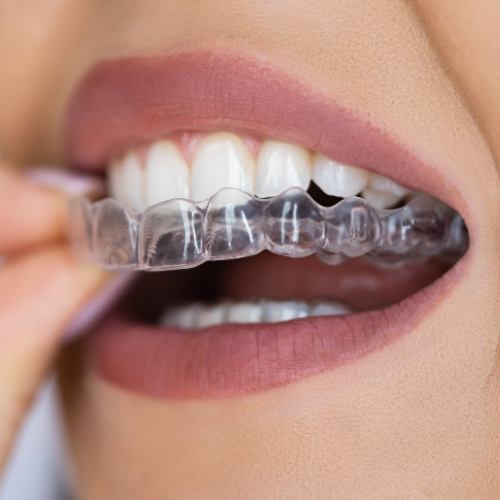
Clear aligners are designed to gradually shift teeth into alignment using a series of trays. Each set applies controlled pressure, guiding teeth step by step into their desired position. Retainers, on the other hand, are all about stability. Once your teeth have moved, retainers ensure they don’t drift back.
This distinction is where most confusion around aligners vs retainers begins. People often assume treatment ends when the last aligner is removed. In reality, that’s just the transition point.
Why timing matters more than people think
Teeth are not fixed in place permanently. They sit in bone and are held by ligaments that need time to stabilize after movement. Without proper retention, there’s a natural tendency for teeth to shift back, sometimes subtly, sometimes significantly.
This is why retainers after aligners are not optional. They are a critical phase of treatment, often referred to as smile maintenance. Skipping or inconsistently wearing retainers can undo months of progress.
When comparing aligners vs retainers, think of aligners as the active phase and retainers as the protective phase. Both are essential, just at different times.
What real-life usage looks like
During treatment, aligners are worn most of the day, typically 20–22 hours. They’re swapped out every one to two weeks as your teeth shift.
Once treatment ends, retainers take over. Initially, they may need to be worn full-time, then gradually reduced to nighttime wear. This long-term commitment is what keeps your results intact.
Many people underestimate this stage. They assume once their smile looks right, the job is done. But long-term smile maintenance depends entirely on consistency with retainers.
That’s why conversations around aligners vs retainers shouldn’t be framed as a choice. It’s a sequence.
Addressing common doubts
One of the most frequent questions is whether retainers are really necessary forever. The honest answer: teeth can shift at any age. While wear time may reduce over the years, occasional use is often recommended for life.
Another concern is comfort. Since retainers don’t apply active pressure like aligners, they tend to feel easier to wear. In fact, many people find them far less noticeable in daily life.
There’s also the question of cost and value. While aligners are the primary investment, retainers protect that investment. When reviewing Smileie’s pricing page, it becomes clear that maintaining results is part of the overall value, not an afterthought.
How Smileie approaches the full journey
A well-designed treatment plan doesn’t stop at alignment. It includes what comes after.
Smileie’s process, outlined on the How It Works page, covers the full cycle: from initial assessment to post-treatment retention. The Smileie Scan page helps determine if you’re a suitable candidate, while the Assessment page guides you through next steps with clarity.
What sets Smileie apart is not just the aligners themselves, but the structured approach to smile maintenance. The Why Smileie page highlights this focus on long-term outcomes, not just short-term results.
Because in the conversation of aligners vs retainers, the real goal isn’t just straight teeth, it’s keeping them that way.
The bigger picture
Understanding aligners vs retainers helps you set realistic expectations. One corrects alignment. The other preserves it. Both are part of the same journey.
People who see the best results are not just those who complete aligner treatment, but those who stay consistent with retainers after aligners. That consistency is what defines lasting success. And ultimately, that’s what smile maintenance is about, not perfection, but preservation.
FAQs
1. Are aligners and retainers the same thing?
No, aligners straighten teeth, while retainers maintain their position after treatment.
2. Do I really need retainers after aligners?
Yes, retainers after aligners are essential to prevent teeth from shifting back.
3. How long do I need to wear retainers?
Initially full-time, then usually at night long-term for effective smile maintenance.
4. Can teeth move even after aligner treatment?
Yes, without retainers, teeth naturally shift over time.
5. Are retainers uncomfortable compared to aligners?
No, they are generally more comfortable since they don’t apply active pressure.
6. What happens if I stop wearing my retainer?
Your teeth may gradually move back, undoing your treatment progress.
7. How do I start aligner treatment with Smileie?
Begin with the Smileie Scan or Assessment page to check eligibility and get a personalized plan.

Latest Blog
-
 Sep 22, 2026
At-Home Impression Kit vs. In-Person 3D Scan: Which Should Encino Residents Choose?
Learn More -

-

-


