




 USA
USA Canada
 UK
UK Italy
Italy Sweden
 Australia

Clear Aligners vs Traditional Orthodontics: The Modern Shift Explained

Most people comparing clear aligners and traditional orthodontics aren't asking which treatment is "better" in general. They're trying to answer a much more personal question:
Which option will realistically fit my lifestyle while still giving me the smile I want?
If you're an adult balancing work, family, social events, and a busy schedule, the answer often isn't as simple as choosing the fastest or cheapest treatment. Appearance, flexibility, comfort, appointments, and cost all influence the decision.
The good news is that modern orthodontics offers more choices than ever before. Traditional braces remain an excellent solution for many complex cases, while clear aligners have become a popular option for people with mild to moderate alignment concerns who want a more discreet and convenient experience.
This guide explains the real differences so you can choose based on your needs, not marketing claims.
Which Is Better: Clear Aligners or Traditional Braces?
For most adults with mild to moderate alignment issues, clear aligners offer a more comfortable, discreet, and flexible treatment experience while still delivering effective results. Traditional braces remain the preferred choice for more complex orthodontic cases that require continuous in-person adjustments and greater tooth movement.
Understanding the Modern Shift in Orthodontics
Orthodontic treatment has evolved significantly over the past decade.
For years, metal braces were the standard solution for nearly every alignment problem. They remain highly effective because they are fixed to the teeth and allow orthodontists to control even the most complex movements.
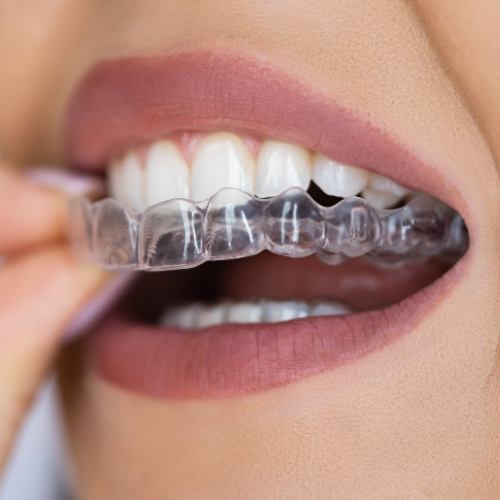
Today, digital technology has made clear aligners a practical alternative for many adults. Instead of brackets and wires, treatment uses a series of custom-made transparent trays that gradually move teeth into position according to a planned sequence.
The biggest change isn't simply how teeth are moved, it's how treatment fits into everyday life.
Cost: Looking Beyond the Initial Price
Cost is often the first comparison people make, but the total investment is more important than the advertised starting price.
Traditional braces typically involve:
-
Initial consultation
-
X-rays and records
-
Regular adjustment appointments
-
Retainers after treatment
The total cost depends on treatment complexity and duration.
Clear aligners also vary in price depending on the case and treatment plan. Many providers offer monthly payment options, making treatment easier to budget without paying the full amount upfront.
If affordability is one of your biggest concerns, reviewing transparent Pricing before deciding helps you compare the complete treatment cost rather than focusing only on monthly payments.
Ultimately, neither option is automatically cheaper for every person. The right comparison depends on your individual treatment needs.
Lifestyle and Convenience: Where Clear Aligners Stand Out
For many adults, lifestyle compatibility becomes the deciding factor.
Traditional braces stay attached throughout treatment. That means there are no trays to remember, but it also means food restrictions, additional cleaning requirements, and visible brackets during work meetings, photos, or social occasions.
Clear aligners work differently.
Because they're removable, you can take them out when eating, drinking anything besides water, brushing, and flossing. Afterward, you simply place them back in and continue wearing them for the recommended daily hours.
Many people appreciate this flexibility because it allows them to:
-
Eat their usual foods
-
Maintain their regular oral hygiene routine
-
Smile confidently during important events
-
Avoid frequent office visits for adjustments
Of course, removable treatment also requires responsibility. Success depends on wearing the aligners consistently every day.
Appearance and Confidence During Treatment
This is one area where the difference is immediately obvious.
Traditional braces are visible every time you smile or speak. While many people wear them confidently, some adults prefer a less noticeable treatment option, particularly in professional environments.
Clear aligners are designed to be discreet. Since they're made from transparent plastic, they're far less noticeable during everyday conversations.
For professionals, students, people attending weddings, interviews, or public-facing jobs, this aesthetic advantage often plays an important role in the decision.
The goal isn't to hide treatment, it's simply to make it less distracting during everyday life.
Comfort and Everyday Wear
No orthodontic treatment is completely free of discomfort because teeth need gentle pressure to move.
The experience, however, differs between the two options.
Braces may cause irritation from brackets and wires, particularly after adjustments. Wax often helps reduce rubbing against the cheeks and lips.
Clear aligners have smooth edges, so many people find them more comfortable during everyday wear. When switching to a new set of aligners, it's common to feel temporary pressure for a day or two as teeth begin moving into their next position.
Both treatments require an adjustment period, but the type of discomfort tends to differ.
Treatment Time and Monitoring
Treatment length depends far more on the complexity of your case than on the appliance itself.
Many mild or moderate cases can be completed efficiently with clear aligners, while more complex corrections may require longer treatment regardless of the method chosen.
The monitoring process also differs.
Traditional braces involve regular in-office visits for tightening and adjustments.
Many clear aligner treatments follow a digital monitoring process with remote oversight, reducing the need for frequent appointments while still allowing professionals to review progress.
Understanding How It Works can help clarify how remote monitoring fits into modern aligner treatment.
Which Cases Are Better Suited to Each Option?
This is where honesty matters.
Clear aligners work well for many mild to moderate orthodontic concerns, including:
-
Mild crowding
-
Small gaps
-
Minor bite adjustments
-
Teeth that need cosmetic alignment
Traditional braces remain the preferred option for many complex situations, including:
-
Significant bite problems
-
Severe crowding
-
Large tooth rotations
-
Complex jaw relationships
-
Cases requiring extensive tooth movement
Choosing the right treatment isn't about personal preference alone. A professional assessment determines which option is most appropriate for your specific teeth.
Comparison at a Glance
Factor |
Clear Aligners |
Traditional Braces |
|
Appearance |
Nearly invisible |
Clearly visible |
|
Eating |
Removed while eating |
Food restrictions apply |
|
Oral hygiene |
Easier brushing and flossing |
More cleaning effort required |
|
Appointments |
Often fewer in-person visits |
Regular adjustment appointments |
|
Comfort |
Smooth plastic trays |
Brackets and wires may irritate |
|
Best for |
Mild to moderate cases |
Mild to highly complex cases |
Who Is Each Option Best For?
Choosing the right treatment becomes much easier once you focus on your lifestyle rather than the technology itself.
Clear aligners are ideal for people who:
-
Want a discreet treatment option
-
Have mild to moderate alignment concerns
-
Prefer fewer clinic visits
-
Value flexibility for work and social life
-
Are committed to wearing aligners consistently
Traditional braces are often better for people who:
-
Have complex orthodontic issues
-
Need significant bite correction
-
Prefer fixed treatment that doesn't rely on daily compliance
-
Require continuous in-person adjustments throughout treatment
Neither choice is universally better. Each solves a different problem.
The Verdict
For the average adult exploring modern orthodontics, clear aligners are often the more practical choice.
They combine effective treatment with greater convenience, improved aesthetics, easier oral hygiene, and a lifestyle that feels less interrupted. That's why they've become increasingly popular among adults who want straighter teeth without changing how they live day to day.
That doesn't mean traditional braces are outdated. They're still an excellent solution for complex orthodontic cases where greater tooth control is necessary.
If your alignment concerns are mild to moderate and you're looking for a treatment that fits naturally into a busy lifestyle, a professionally planned clear aligner system like Smileie can be a sensible next step. The best way to know whether you're a suitable candidate is to begin with an assessment that evaluates your individual smile.
Frequently Asked Questions
1. Are clear aligners as effective as traditional braces?
For mild to moderate alignment issues, clear aligners can achieve results comparable to traditional braces when worn as directed. More complex orthodontic problems may still require braces for the best outcome.
2. Which costs more: clear aligners or braces?
Costs vary depending on treatment complexity, provider, and location. Comparing the total treatment cost, including retainers, appointments, and follow-up care, gives a more accurate picture than looking only at the starting price.
3. Do clear aligners work faster than metal braces?
Treatment time depends primarily on the complexity of your case. Some mild cases may finish sooner with aligners, while more complex corrections often take longer regardless of the treatment method.
4. Are metal braces better for severe crowding?
Yes. Severe crowding, major bite problems, and complex tooth movements are often better managed with traditional braces because they provide greater control throughout treatment.
5. Which option is easier to keep clean?
Clear aligners are generally easier because you remove them before brushing and flossing. Braces require extra care to clean around brackets and wires after meals.
6. Can adults choose clear aligners instead of braces?
Many adults are excellent candidates for clear aligners, especially if they have mild to moderate orthodontic concerns and can commit to wearing the aligners for the recommended number of hours each day.
7. How do I know which treatment is right for me?
The best choice depends on your dental condition, lifestyle, treatment goals, and budget. A professional assessment is the most reliable way to determine whether clear aligners or traditional braces are the better fit for your smile.

Latest Blog
-
 Sep 22, 2026
At-Home Impression Kit vs. In-Person 3D Scan: Which Should Encino Residents Choose?
Learn More -

-

-


