




 USA
USA Canada
 UK
UK Italy
Italy Sweden
 Australia

How Teeth Move with Clear Aligners: The Science Behind the Process

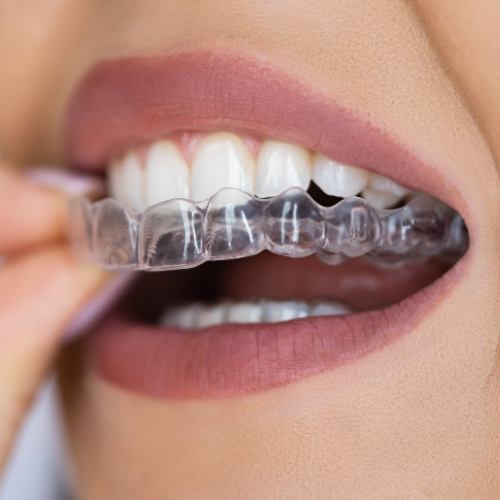
Clear aligners move teeth by applying gentle, controlled pressure that gradually shifts them into position. This pressure triggers bone remodeling, where bone dissolves on one side of the tooth and rebuilds on the other, allowing safe, predictable tooth movement over time.
When people start aligner treatment, one of the most common questions is:
“How can a thin plastic tray actually move my teeth?”
It’s a fair question. Teeth feel solid, almost fixed in place. But biologically, they’re not fused to the jaw, they’re held in a dynamic system that responds to pressure. Clear aligners simply take advantage of that natural process.
Let’s break down the orthodontic science behind how aligners move teeth, and why it works so effectively.
Teeth Aren’t Fixed, They’re Suspended
Each tooth sits in a socket within your jawbone, connected by a tiny structure called the periodontal ligament (PDL).
Think of the PDL like a shock-absorbing cushion:
-
It holds the tooth in place
-
It allows slight movement under pressure
-
It contains cells that respond to force
This is the key to all orthodontic treatment, not just aligners, but braces too. Without this ligament, tooth movement wouldn’t be possible.
How Aligners Move Teeth (The Core Mechanism)
Clear aligners move teeth by applying precisely calculated pressure in specific directions.
Here’s what happens biologically:
1. Pressure Is Applied
Each aligner is slightly different from the previous one. When you wear it, it pushes certain teeth in a planned direction.
2. Bone Breaks Down (Resorption)
On the side where the tooth is being pushed, the bone begins to break down slightly. This creates space for the tooth to move.
3. Bone Rebuilds (Deposition)
On the opposite side, new bone forms to support the tooth in its new position.
4. Tooth Stabilizes
Over time, this continuous cycle allows the tooth to shift safely and remain stable. This process is called bone remodeling, and it’s the foundation of orthodontic science.
Why Movement Happens Gradually
A common misconception is that faster movement is better. In reality, slow movement is what keeps teeth healthy.
If too much force is applied:
-
The ligament can get damaged
-
Bone may not remodel properly
-
Treatment can become unstable
Aligners are designed to move teeth in small increments, typically fractions of a millimeter per stage. That’s why you switch trays every 1–2 weeks. Think of it like nudging a heavy object across the floor instead of trying to shove it all at once.
The Role of Treatment Planning
Before aligners are even made, your teeth are digitally mapped to create a step-by-step movement plan.
Using a 3D scan, orthodontic software predicts:
-
Where each tooth is now
-
Where it needs to go
-
How to get there safely
Each aligner represents one stage in that journey. This is why treatment isn’t random, it's a pre-engineered movement, executed over time.
(This is part of the “How It Works” process, planning first, movement second.)
What Aligners Actually Do (And Don’t Do)
Clear aligners are excellent at:
-
Closing gaps
-
Straightening mild to moderate crowding
-
Correcting minor bite issues
But they don’t “pull” teeth like wires do. Instead, they:
-
Push with controlled force
-
Guide teeth through planned stages
-
Rely on biology to do the rest
In more complex cases, additional tools like attachments (small tooth-colored bumps) may be used to improve control.
Why Wearing Time Matters So Much
Aligners only work when they’re worn.
For the biological process to continue:
-
Teeth need consistent pressure
-
The ligament needs sustained stimulation
-
Bone remodeling needs uninterrupted signals
If aligners are worn inconsistently:
-
Movement slows down
-
Teeth may shift backward
-
Treatment timelines extend
That’s why 20–22 hours per day isn’t a suggestion, it’s what keeps the science working.
Does It Hurt?
Another common concern.
What people describe as “pain” is usually:
-
Mild pressure
-
Tightness when switching aligners
This is actually a sign that tooth movement has started. It typically fades within a couple of days as the tooth adapts.
The Big Picture: It’s Biology, Not Just Plastic
Clear aligners aren’t doing the work alone.
They’re simply the tool that triggers a natural biological response:
-
Pressure - cellular activity
-
Cellular activity - bone remodeling
-
Bone remodeling - tooth movement
That’s the real science behind teeth movement with aligners.
Final Thought
Clear aligners may look simple, but the science behind them is anything but.
They work because your body is designed to adapt to pressure, and with the right plan, that adaptation can be guided into a healthier, more aligned smile. That’s orthodontic science in action.
FAQs
1. How long does it take for aligners to start moving teeth?
Movement begins within a few days of wearing aligners, but visible changes usually take a few weeks.
2. Can aligners move all types of teeth?
They can move most teeth in mild to moderate cases. Complex movements may require additional techniques or attachments.
3. Why do I need multiple aligners?
Each aligner makes a small adjustment. Multiple trays ensure gradual, safe movement over time.
4. What happens if I skip wearing my aligners?
Teeth can shift back, slowing progress and potentially affecting final results.
5. Is aligner treatment safer than braces?
Both are safe when properly planned. Aligners often apply more controlled, gentle forces.
6. Do teeth stay in place after treatment?
Yes, but only with retention. After movement, retainers are needed to maintain results.
7. Why do some aligners feel tighter than others?
Each new aligner introduces a new stage of movement, which can create temporary pressure.

Latest Blog
-
 Sep 22, 2026
At-Home Impression Kit vs. In-Person 3D Scan: Which Should Encino Residents Choose?
Learn More -

-

-


