




 USA
USA Canada
 UK
UK Italy
Italy Sweden
 Australia

Smileie Clear Aligners: What’s Included in Your Plan

A Smileie clear aligners plan usually includes your initial assessment, a custom digital treatment plan, your series of aligners, a treatment kit, and ongoing clinical support, plus guidance on wear, progress checks, and refinements if needed. You’ll know what steps come next and what your timeline looks like.
Most people don’t hesitate because they dislike the idea of straighter teeth. They hesitate because they hate uncertainty.
You’ve probably felt it too: you start looking into clear aligners, and suddenly you’re trying to decode what’s “included,” what’s “extra,” what happens if your teeth don’t track perfectly, and whether you’ll be left figuring things out on your own halfway through. That decision-stage doubt is normal. It’s also avoidable, once you know what a well-designed plan should actually cover.
This article is a plain-English breakdown of what’s typically inside a Smileie clear aligners plan, what the care pathway looks like, and how to evaluate value without getting distracted by big promises. The goal isn’t to overwhelm you. It’s to make sure you can say, with confidence, “Yes, this is the kind of support I’d want for my smile.”
What “Included” Really Means With Clear Aligners
When people ask what’s included, they’re often thinking about the aligners themselves. That’s part of it, but it’s not the whole story. Proper aligner therapy is a process, not a product shipment.
A complete aligner experience should cover:
-
A starting point that’s accurate (good scans or impressions and a clinical review)
-
A plan you can understand (digital simulation, timeline, expected movements)
-
Devices that fit and function (custom trays made to your teeth and your plan)
-
Support while you’re wearing them (check-ins and adjustments when real life happens)
-
A finish that’s stable (retention guidance so results last)
When you see the phrase aligner plan includes, it should refer to that entire pathway. Otherwise, you may be comparing price tags that don’t represent the same level of care.
Step 1: Starting the Right Way (Assessment + Scan)
Every successful case begins with a solid diagnosis. Clear aligners aren’t “one size fits all,” and the first step is verifying you’re a good candidate and mapping what’s realistic.
With Smileie, the beginning typically connects to the Smileie Scan page and the Assessment page. In practical terms, this is where your bite, spacing, crowding, and alignment goals are evaluated so your plan is built around your mouth, not a generic template.
An experienced clinician is looking at details you may not notice:
-
Are there rotations that need special sequencing?
-
Is there enough room to align without compromising gum health?
-
Will your bite settle comfortably at the end?
-
Do you need minor IPR (interproximal reduction) or attachments to guide movement?
Not everyone needs every step, but a responsible workflow makes room for those considerations. That’s how you avoid “surprises” later.
Step 2: Your Digital Treatment Plan (The Map Before the Journey)
Once records are taken, your teeth are modeled digitally and a step-by-step movement sequence is designed. This is the clinical blueprint, your tooth movements aren’t guessed; they’re staged.
A strong plan does two things at once:
-
It aims for the aesthetic result you want (straighter teeth, cleaner smile line)
-
It respects biology (teeth move safely when forces and timing are appropriate)
This is also where timelines and staging are established. Some movements happen early, others later. That matters, because aligner therapy is about controlled progression, not speed for its own sake.
If you’re reviewing what your aligner plan includes, make sure the plan is more than a before-and-after promise. You want a structured sequence that anticipates real-world tracking.
Step 3: Your Custom Aligner Set (What You’ll Actually Wear)
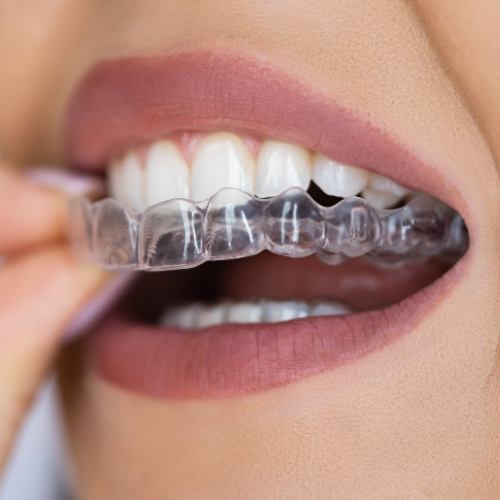
Here’s the core of it: your aligners are manufactured based on your digital plan, and you wear them in order, each set designed to move your teeth a small amount.
A few practical details most people appreciate knowing up front:
-
Fit matters more than feel. Aligners should feel snug, not loose.
-
Consistency matters more than intensity. Wearing them as advised is what delivers the movement.
-
Your teeth may “track” differently week to week. That’s normal. Monitoring is there for a reason.
In a Smileie clear aligners plan, you’re not just receiving trays, you’re receiving a staged clinical protocol that those trays follow.
Step 4: The Treatment Kit (Small Things That Make a Big Difference)
Let’s talk about what people don’t think about until day one: the extras that make wearing aligners easier, cleaner, and more predictable.
A thoughtful treatment kit supports compliance and hygiene, which directly affects outcomes. Depending on the plan and current offerings, kits commonly include essentials like items for cleaning, storage, and wear support.
Why this matters: aligner therapy is a daily habit. The more friction you remove, losing a case, struggling with cleanliness, not having what you need, the easier it is to stay consistent. And consistency is what makes your smile change.
When patients ask me what separates a smooth experience from a frustrating one, I often point to two things: clarity on wear expectations and having a reliable treatment kit from the start.
Step 5: Check-Ins and Support During Treatment (This Is Where Trust Is Built)
Even in straightforward cases, teeth don’t always behave exactly like a simulation. That isn’t a failure, it’s biology.
That’s why support during treatment matters so much. You want a system that helps you answer questions like:
-
“This aligner feels tight on one tooth, normal or not?”
-
“I missed some wear time last week, what should I do now?”
-
“My trays fit except at the back, do I move forward or pause?”
This is another place where the phrase aligner plan includes should mean something tangible: guidance, check-ins, and clinical oversight when needed.
If you’re the kind of person who likes to understand the full flow before committing, the How It Works page is a helpful reference point, because it shows the step-by-step structure rather than just the end result.
Step 6: Refinements (When Your Teeth Need a Second Pass)
Refinements are one of the most misunderstood parts of aligner treatment. Many patients assume that if refinements exist, something went wrong. Not necessarily.
Refinements are common because:
-
small rotations can lag behind
-
bite settling can require extra staging
-
a tooth may track slower than expected
A good plan anticipates that possibility. In many modern aligner systems, refinements are a normal part of finishing well.
If you’re evaluating Smileie clear aligners, ask yourself a simple question: does the plan allow for adjusting the last 10%? Because that last 10% is often what makes your smile look intentional rather than “better than before.”
Step 7: Retention Guidance (Keeping Results After the Last Aligner)
Straight teeth are not a “one-and-done” event. After active movement, your teeth need time to stabilize in their new positions. That’s where retention comes in.
Retention is not an upsell; it’s the clinical reality of orthodontics. Whether you’re using retainers full-time at first or transitioning to nighttime wear later, the goal is simple: protect the work you just did.
This is also a good moment to think about value, not just cost. If you’re comparing options, look at what your aligner plan includes after the final tray. The finish phase matters.
Understanding Value Without Getting Tricked by Price
It’s completely fair to ask, “Is this worth it?” The key is to compare like with like.
When you review costs, the Smileie pricing page is the right place to get clarity on what you’re paying for, especially if you want to understand what’s bundled into the plan versus what might be separate elsewhere.
Here’s how I advise patients to think about value:
-
If you only pay for trays, you’re paying for plastic.
-
If you pay for a plan, you’re paying for a designed outcome with oversight.
-
If you pay for an experience, you’re paying for predictability, less stress, fewer surprises, better finishing.
A Smileie clear aligners plan is most useful when it’s built around that predictability.
Common Decision-Stage Doubts (And Honest Answers)
“What if I’m not a good candidate?”
Then you shouldn’t be pushed into treatment. A proper assessment (linked to the Assessment page) exists to protect you, not just enroll you.
“Will it hurt?”
You can expect pressure, especially when changing trays. Sharp pain, gum trauma, or persistent discomfort should be discussed with your support team.
“What if I’m busy and forgetful?”
Aligners reward consistency. If you know you’ll struggle with wear time, choose a plan that gives you clear reminders, practical support, and realistic staging, plus a treatment kit that helps keep habits easy.
“How do I know the brand is trustworthy?”
Look for transparency, clinical involvement, and clear explanations, especially around candidacy, refinements, and retention. The Why Smileie page is relevant here because it speaks to quality standards and what the brand prioritizes.
So, What’s Included in Your Smileie Plan, In Plain Terms
When people ask what a Smileie clear aligners plan covers, they usually want reassurance that they’re not buying a box and hoping for the best.
In most cases, a Smileie clear aligners plan is designed to include: your starting assessment (often tied to the Smileie Scan page), your digital treatment plan, your aligner sequence, a treatment kit, and ongoing support, plus refinements if clinically needed and guidance for keeping results stable.
That’s what “included” should mean: a structured, supported path from day one to a result you can maintain.
If you’re ready to act on it, the Assessment page is the natural next step, because clarity feels better than guesswork.
FAQs
How long does treatment usually take with Smileie clear aligners?
It depends on how much movement you need. Mild spacing or crowding can be quicker, while more complex alignment takes longer. Your timeline should be based on your scan and clinical plan, not a generic estimate.
What does the aligner plan includes during treatment support?
It should include progress guidance, answers to fit or comfort concerns, and direction if tracking issues show up. Support isn’t just “nice to have”, it helps you stay on track and finish properly.
Is the treatment kit necessary, or can I skip it?
Most people are glad they have it. A good treatment kit reduces daily friction, cleaning, storage, and wear habits become easier, which usually improves consistency.
Do Smileie clear aligners work for overbite or bite issues?
Some bite concerns can be improved with aligners, but not all cases are suitable. This is exactly why assessment matters, your bite needs a clinician’s evaluation before anyone promises a result.
What happens if my aligners don’t fit properly?
Don’t force it and don’t ignore it. Mild tightness is normal, but visible gaps or sudden looseness should be reviewed. A quality plan includes guidance for troubleshooting and deciding whether to pause, repeat, or adjust.
Are refinements included if my teeth need extra alignment?
Refinements are common in aligner therapy and can be part of finishing well. The key is whether your plan is structured to handle them clinically rather than treating them as a surprise.
Where can I see cost details and what my plan covers?
For clear, official breakdowns, check the Smileie pricing page. That’s the best reference when you’re comparing value and trying to understand what’s included versus optional.

Latest Blog
-
 Sep 22, 2026
At-Home Impression Kit vs. In-Person 3D Scan: Which Should Encino Residents Choose?
Learn More -

-

-


