



 USA
USA Canada
 UK
UK Italy
Italy Sweden
 Australia

Step-by-Step Breakdown of a Clear Aligner Treatment Plan in 2026

A clear aligner treatment plan is a customized digital roadmap that shows how teeth will move from their current position to the desired alignment. It includes scans, treatment simulations, aligner stages, monitoring schedules, and retention planning to achieve predictable results.
Millions of Americans are choosing clear aligners over traditional braces, but many still have one important question:
What actually happens between getting approved for treatment and seeing a straighter smile?
The answer lies in the aligner treatment plan, the customized roadmap that determines how your teeth move, how long treatment takes, and what results you can expect.
In 2026, advances in digital dentistry, 3D imaging, and remote monitoring have made treatment planning more precise than ever. Modern clear aligner systems can predict tooth movement with remarkable accuracy, helping patients understand their treatment before they even wear their first aligner.
Let's break down exactly how a modern aligner treatment plan in USA works from start to finish.
Why the Treatment Plan Matters More Than the Aligners
Many people assume that the plastic trays themselves straighten teeth. In reality, the trays are simply the tools. The treatment plan is the strategy behind them.
Think of it like a GPS route. The aligners are the vehicle, but the treatment plan determines where you're going, how you'll get there, and what happens at every turn.
Without accurate planning, even the most advanced clear aligners may not produce optimal results.
A well-designed treatment plan considers:
-
Tooth position
-
Bite alignment
-
Jaw relationships
-
Spacing issues
-
Crowding levels
-
Tooth shape and size
-
Long-term stability
This is why professional evaluation remains essential, even with modern at-home orthodontic options.
Step 1: Initial Evaluation and Smile Assessment
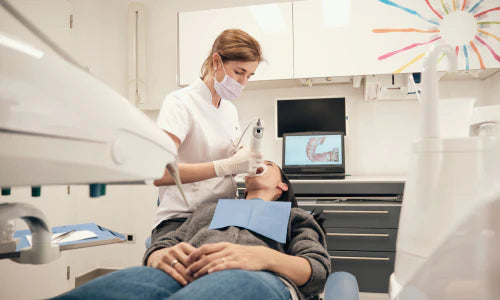
Every treatment begins with understanding the current condition of your teeth.
An orthodontic professional evaluates:
-
Crooked teeth
-
Crowding
-
Gaps between teeth
-
Overbite
-
Underbite
-
Crossbite
-
Midline alignment
-
Overall oral health
The goal isn't simply to make teeth look straighter. The goal is creating a healthy bite that functions properly while improving appearance.
For example, two people may both have crowded front teeth, but the underlying causes can be completely different. One may require minor alignment adjustments, while another needs more comprehensive movement throughout the dental arch.
This is why treatment plans are highly individualized.
Step 2: Digital Scan and Data Collection
Modern orthodontics has largely replaced messy dental impressions with digital technology. Using a high-resolution scan, providers create a precise 3D model of your teeth.
This digital model captures:
-
Tooth positions
-
Arch shape
-
Bite relationships
-
Surface details
-
Alignment irregularities
The accuracy of these scans allows treatment planning software to simulate movements down to fractions of a millimeter.
Compared with traditional impressions, digital scanning offers:
-
Better precision
-
Faster processing
-
Improved patient comfort
-
More predictable treatment outcomes
This digital model becomes the foundation of the entire clear aligners treatment plan.
Step 3: Creating a Digital Tooth Movement Simulation
This is where modern treatment planning becomes fascinating.
Specialized software creates a virtual simulation showing how teeth will move throughout treatment.
Instead of seeing only the starting and ending positions, orthodontists can review every movement stage.
The software helps determine:
-
Which teeth move first
-
How much force should be applied
-
Movement sequencing
-
Treatment duration
-
Potential challenges
This process helps reduce unnecessary tooth movement and improves treatment efficiency. Patients often appreciate being able to visualize their projected results before treatment begins.
However, it's important to remember that simulations are predictions, not guarantees. Real teeth respond differently from digital models, which is why monitoring remains an important part of treatment.
Step 4: Mapping Out Individual Aligner Stages
Teeth cannot move all at once. They must move gradually and safely.
The treatment plan divides movement into a series of stages. Each stage corresponds to a specific set of teeth aligners.
A typical aligner may move a tooth only a small fraction of a millimeter before the next aligner takes over.
This controlled progression helps:
-
Protect tooth roots
-
Maintain bone health
-
Improve comfort
-
Increase predictability
Depending on complexity, patients may receive anywhere from a few aligners to several dozen throughout treatment.
Step 5: Manufacturing Custom Clear Aligners
Once the digital plan is finalized, custom aligners are fabricated based on the approved movements. Each aligner is designed to fit the teeth at a specific stage.
Because every aligner is created from treatment-plan data, no two sets are exactly alike. The aligners are engineered to apply controlled pressure in carefully calculated directions.
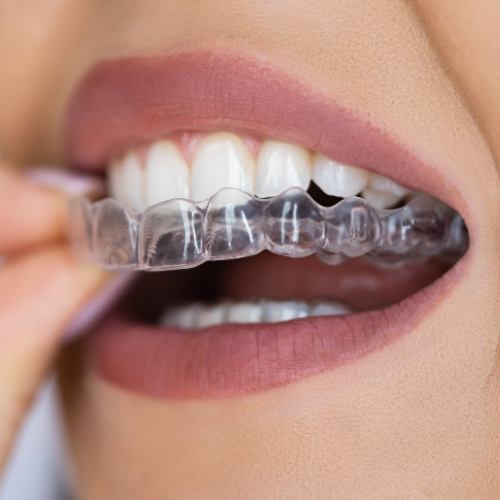
This pressure stimulates biological remodeling processes around the teeth, allowing gradual movement over time. The result is a series of nearly invisible trays designed specifically for one patient and one treatment plan.
Step 6: Wearing the Aligners Consistently
Even the most advanced treatment plan depends on patient compliance.
Most clear aligner systems require aligners to be worn for approximately 20–22 hours daily.
Removing aligners too often can slow progress and affect outcomes.
Think of tooth movement like training for a marathon.
Consistency matters more than intensity.
Wearing aligners as directed allows teeth to move according to the planned schedule, helping treatment stay on track.
Step 7: Monitoring Progress Throughout Treatment
A treatment plan is not something created once and forgotten.
Progress must be monitored regularly.
Providers evaluate whether:
-
Teeth are tracking correctly
-
Aligners fit properly
-
Planned movements are occurring
-
Adjustments are needed
In 2026, many providers use remote monitoring technology that allows patients to submit progress photos between appointments.
This makes treatment more convenient while maintaining professional oversight.
The process outlined in How It Works typically includes periodic reviews to ensure treatment remains aligned with the original goals.
Step 8: Mid-Course Adjustments When Necessary
One common misconception is that every treatment proceeds exactly as planned.
In reality, teeth are biological structures.
They don't always move perfectly according to computer simulations.
Sometimes providers may recommend:
-
Additional aligners
-
Refinement trays
-
Minor treatment modifications
-
Extended wear periods
These adjustments are normal and often improve final results. The flexibility to refine treatment is one reason modern clear aligners have become increasingly effective.
Step 9: Final Evaluation and Bite Assessment
Straight teeth alone don't define treatment success.
Orthodontic professionals evaluate:
-
Bite function
-
Tooth contact
-
Smile symmetry
-
Arch coordination
-
Long-term stability
A successful treatment plan balances aesthetics with function. Patients often focus on visible improvements, but proper bite alignment contributes significantly to oral health and long-term comfort.
Step 10: Retention and Long-Term Stability
The final aligner is not actually the end of treatment.
Retention is what protects your investment.
Teeth naturally tend to drift back toward their original positions over time.
Retainers help maintain the results achieved during treatment.
Most retention plans involve:
-
Full-time wear initially
-
Gradual transition to nighttime wear
-
Long-term maintenance
Without retention, even excellent treatment results can relapse. In many cases, retention is just as important as the active treatment phase itself.
Common Misconceptions About Clear Aligner Treatment Plans
"The aligners do all the work."
The treatment plan drives the process. Aligners simply deliver the prescribed movements.
"Every patient gets the same trays."
Each plan is customized based on individual anatomy and treatment goals.
"Digital simulations guarantee results."
Simulations are highly useful planning tools but cannot perfectly predict biological responses.
"Treatment ends when the last aligner is finished."
Retention remains essential for maintaining long-term results.
"Clear aligners only fix cosmetic issues."
Many treatment plans also address bite problems and functional concerns.
What Makes a Great Aligner Treatment Plan in 2026?
A high-quality aligner treatment plan in USA should include:
-
Comprehensive evaluation
-
Accurate digital scans
-
Realistic treatment goals
-
Predictable movement sequencing
-
Ongoing monitoring
-
Refinement options
-
Retention planning
Technology has improved dramatically, but successful outcomes still depend on careful planning and professional oversight.
When evaluating providers, understanding the quality of the treatment plan may be more important than focusing solely on the aligners themselves.
Final Thoughts
The success of any clear aligners treatment plan depends on much more than the trays themselves. Behind every straighter smile is a carefully engineered process involving digital planning, precise tooth movement, progress monitoring, and long-term retention.
As orthodontic technology continues to evolve in 2026, treatment planning has become increasingly personalized and predictable. Understanding how that process works helps patients make informed decisions and set realistic expectations for their smile journey.
FAQs
How long does a clear aligner treatment plan usually take?
Most treatments range from 4 to 18 months, depending on the complexity of the case and patient compliance.
Are digital scans necessary for clear aligners?
Yes. Accurate digital scans help create precise treatment simulations and custom aligners tailored to your teeth.
Can a treatment plan change during treatment?
Yes. Providers may recommend refinements or adjustments if teeth are not tracking exactly as expected.
Do clear aligners work for severe crowding?
Some moderate-to-severe cases can be treated with clear aligners, but eligibility depends on professional evaluation.
How often are aligners changed?
Most patients switch to a new aligner every one to two weeks, depending on the prescribed treatment plan.
What happens if I don't wear my aligners enough?
Insufficient wear can delay treatment, affect tooth movement, and increase the likelihood of needing refinements.
Why are retainers needed after treatment?
Retainers help prevent teeth from shifting back toward their original positions and preserve treatment results long term.

Latest Blog
-
 Sep 22, 2026
At-Home Impression Kit vs. In-Person 3D Scan: Which Should Encino Residents Choose?
Learn More -

-

-


