



 USA
USA Canada
 UK
UK Italy
Italy Sweden
 Australia

Clear Aligners vs Braces: Which Moves Teeth Differently?

Clear aligners move teeth through a sequence of removable trays that apply controlled pressure in stages, while braces move teeth using brackets and wires that continuously guide teeth along an archwire. Both rely on orthodontic movement within bone, but they differ in how force is delivered and controlled.
If you ask most people about clear aligners vs braces, the first difference they mention is visibility. Braces are metal. Aligners are clear.
But orthodontists don’t usually think about aesthetics first. The real distinction lies in how each system moves teeth.
Both rely on the same biological process, controlled orthodontic movement inside bone, yet they apply forces in very different ways. Understanding that difference helps explain why certain cases respond better to one approach than another, and why modern aligner systems have become so capable over the last decade. Let’s unpack how each method actually works.
The Biology Is the Same
No matter the appliance, teeth move through the same biological mechanism.
Orthodontic force compresses the ligament on one side of a tooth and stretches it on the other. Bone slowly dissolves where pressure exists and rebuilds where tension occurs. Over time, the tooth shifts position.
This process, known as orthodontic movement, happens gradually. It’s measured in fractions of a millimeter per week.
So when comparing clear aligners vs braces, the biology isn’t the difference. The difference is how that force is applied and controlled.
How Braces Move Teeth
Braces rely on a mechanical system that orthodontists have used for decades.
Small brackets are bonded to each tooth. A wire connects them all. As the wire tries to return to its original shape, it pulls teeth into alignment. What makes braces powerful is the level of control the wire provides.
Orthodontists can bend, twist, or change the wire to direct teeth in very precise ways, rotating them, pulling them downward, or shifting roots inside bone.
Because the system stays fixed to the teeth, the force remains active all day. That’s why braces have traditionally been used for more complex bite corrections.But that doesn’t mean aligners move teeth less effectively, they simply do it differently.
How Clear Aligners Move Teeth
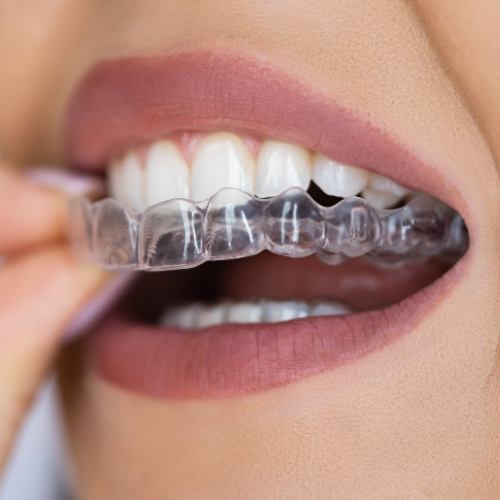
Clear aligners replace wires with a series of custom trays.
Each aligner is slightly different from the last. When worn, it applies gentle pressure that nudges teeth toward the next planned position.
After about one to two weeks, the patient switches to the next aligner in the sequence.
The process continues until the final position is reached.
From a biomechanics perspective, aligner mechanics rely on incremental staging, every aligner produces a small portion of the total movement.
Because the trays cover the entire tooth surface, force is distributed differently than with brackets. Attachments, small tooth-colored shapes sometimes placed on teeth, help guide movements that require additional grip.
When people compare clear aligners vs braces, they’re often surprised to learn that aligners are not simply “plastic trays.” They are carefully engineered devices designed to control orthodontic movement step by step.
Why Some Movements Feel Different
Certain tooth movements respond differently depending on the appliance.
For example:
Rotations
Braces can rotate teeth effectively because brackets allow the wire to twist. Aligners use attachments and shaped trays to achieve the same goal, though the process may require more staging.
Vertical movements
Moving teeth up or down in the jaw can be challenging for any orthodontic system. In aligner treatment, aligner mechanics sometimes rely on additional attachments or elastics to create the necessary force direction.
Arch expansion
Clear aligners often perform well here because the trays apply broad, even pressure across multiple teeth.
These nuances explain why orthodontists analyze each case individually when considering clear aligners vs braces.
Why Digital Planning Changed Aligner Treatment
Earlier aligner systems were limited partly because planning technology was less advanced.
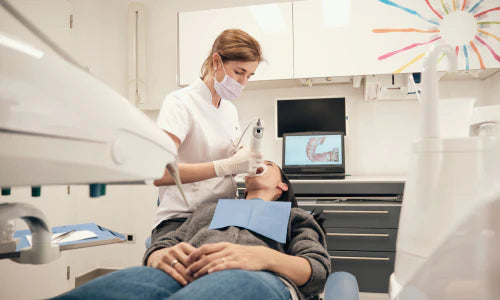
Today, treatment begins with a 3D scan of the patient’s teeth. The entire movement sequence can be mapped before the first aligner is even produced.
That digital planning step allows clinicians to visualize each stage of orthodontic movement, identify potential issues early, and adjust staging accordingly.
Tools like the Smileie Scan help capture this precise 3D model, which becomes the foundation for designing the aligner sequence.
If you’re curious about how this planning translates into treatment, the How It Works page explains the step-by-step process behind aligner therapy. This digital approach is one reason aligners have advanced so quickly in recent years.
Control vs Flexibility
Another interesting difference in clear aligners vs braces is how treatment interacts with daily life.
Braces provide constant force because they remain attached to the teeth. Patients don’t have to think about wearing them.
Aligners require cooperation. They work best when worn about 20–22 hours per day.
But that removability also creates advantages. Patients can take them out while eating, brushing, or for short periods during the day.
From a clinical perspective, aligner mechanics are designed around this wear schedule. The staged movements assume consistent use, which is why orthodontists emphasize wear time.
Why Many Adults Choose Aligners
A large percentage of aligner patients are adults who previously avoided orthodontic treatment.
For them, the decision isn’t purely about aesthetics. It’s often about convenience and predictability.
Clear aligners allow treatment to fit more easily into daily routines. At the same time, advances in orthodontic movement planning have expanded the range of cases that can be treated successfully with aligners.
When people explore clear aligners vs braces, they often discover the decision depends less on “which works better” and more on which system fits their specific case and lifestyle.
What Matters Most: Diagnosis
Orthodontic appliances are tools. Their effectiveness depends on diagnosis and planning.
A well-designed aligner plan can produce excellent results. Poor planning, with either braces or aligners, can lead to inefficient movement.
That’s why treatment typically begins with detailed imaging and digital analysis.
The goal is to determine the safest and most efficient path for orthodontic movement, regardless of the appliance chosen.Understanding this principle is key when comparing clear aligners vs braces.
The Real Difference
When people debate clear aligners vs braces, the conversation often focuses on appearance.
But from an orthodontic perspective, the real difference lies in force delivery.
Braces rely on wires and brackets that continuously guide teeth. Aligners rely on sequential trays that stage movement gradually.
Both systems are built on the same biological principles.The key is choosing the right tool, and designing the right plan, for the individual smile.
FAQs
1. Are clear aligners slower than braces?
Not necessarily. Treatment speed depends on the type of tooth movement required and how consistently aligners are worn. In many cases, timelines are similar.
2. Do aligners move roots or only the visible part of teeth?
Aligners move the entire tooth, including the root. Like braces, they rely on controlled orthodontic movement within bone.
3. Can clear aligners fix crowded teeth?
Yes. Mild to moderate crowding is commonly treated with aligners, especially when digital treatment planning is used.
4. Are braces better for complex cases?
Some severe bite problems may still benefit from braces or a combination approach. However, modern aligner systems can treat a wide range of orthodontic conditions.
5. Why do some aligners have small bumps on teeth?
These attachments help the tray grip teeth and guide certain movements. They play an important role in aligner mechanics.
6. Do aligners hurt less than braces?
Most patients report milder pressure with aligners because each tray produces smaller staged movements.
7. How do orthodontists know where teeth will move?
Treatment planning software models the entire sequence of orthodontic movement before aligners are manufactured.

Latest Blog
-
 Sep 22, 2026
At-Home Impression Kit vs. In-Person 3D Scan: Which Should Encino Residents Choose?
Learn More -

-

-


