




 USA
USA Canada
 UK
UK Italy
Italy Sweden
 Australia

Smileie Clear Aligners: What You Get From Start to Finish

With Smileie clear aligners, you start by checking if you’re a fit, then get a custom plan, your aligners delivered, guided check-ins during progress, possible refinements if needed, and retainers at the end to keep your new smile stable.
Most people don’t worry about straight teeth until they see a photo they didn’t expect. Or they catch their reflection mid-laugh and notice a front tooth that’s slowly drifted. That’s usually the moment the questions start: “Can I fix this without braces?” “How long will it take?” “What actually happens after I sign up?”
If you’re considering Smileie clear aligners, the helpful thing isn’t another promise of a “perfect smile.” It’s understanding the process, what you receive, what you do, what your dental team does, and what’s normal along the way. Clear aligners are simple in concept (small, steady movements), but the experience feels smoother when you know what’s coming.
Below is what a typical start-to-finish journey looks like, explaining the way I’d walk a patient through it in a clinic: calm, realistic, and focused on the details that matter.
Step 1: You start with a fit check, not a guess
A good clear aligner treatment begins with one honest question: Are aligners the right tool for your teeth? Not every bite concern is a good match for remote aligners, and you deserve clarity early.
This is where the Smileie Assessment page comes in. It’s essentially the “next-step” checkpoint, your starting line, not a commitment. You’re looking to confirm things like:
-
Are the concerns mild to moderate crowding or spacing?
-
Is your bite generally stable, or are there signs of deeper bite issues?
-
Are there existing dental needs (like cavities or gum inflammation) that should be addressed first?
Even if you’re eager to begin, this step protects you. It prevents people from starting an invisible braces plan that isn’t designed for their bite reality.
Step 2: Records, because aligners move teeth, not guesses
Aligners are only as accurate as the records behind them. Tooth movement is precise work, millimeter by millimeter, so the “map” has to be good.
Smileie typically collects those records through the Smileie Scan page, which is where your teeth are captured in a way a clinician can actually plan from. Think of this as the foundation: the more accurate the scan, the more predictable your path.
You may hear terms like “3D scan,” “impressions,” or “digital model.” What matters is the outcome: a clear digital picture of your current tooth positions and bite.
This is also the moment where many people feel relief. Seeing your teeth represented clinically, rather than through selfies, turns uncertainty into something measurable.
Step 3: Your treatment plan is designed, not “pulled from a template”
Here’s the part most people underestimate: aligners don’t “straighten teeth” on their own. The plan does.
Your invisible braces plan is the sequence of movements your teeth will follow, staged in a safe and realistic order. In thoughtful planning, the clinician considers:
-
Which teeth can move first without causing interference
-
How to protect your bite while aligning the front teeth
-
Whether small details (like tooth shape or rotation) require added help
-
How to keep results stable, not just fast
On Smileie, the flow is explained clearly on the How It Works page, and it’s worth reading even if you’re already convinced. Understanding the “why” behind the steps makes you a better participant in your own treatment, which genuinely improves outcomes.
If you’ve ever wondered why some people get great aligner results and others don’t, it usually comes down to planning precision and wear consistency, not luck.
Step 4: You receive your aligners, plus the instructions that actually matter
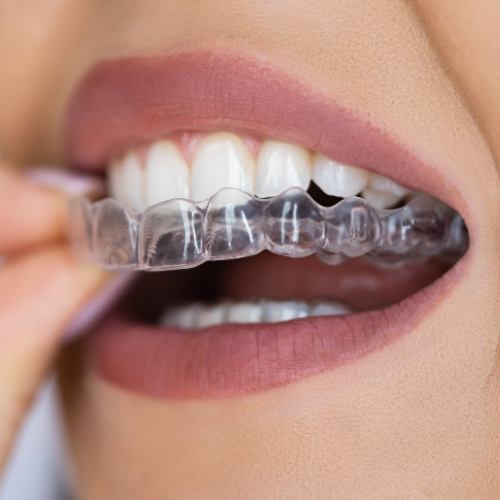
When your Smileie clear aligners arrive, you’re receiving more than plastic trays. You’re receiving a sequence. Each set is designed to be worn for a specific period before moving to the next.
This is the phase where good education prevents unnecessary stress. Expect guidance on:
-
Wear time: Most aligner plans require long daily wear (often 20–22 hours).
-
Changing trays: Usually every 1–2 weeks, depending on your plan.
-
Cleaning: Gentle brushing and rinsing; avoid hot water that can warp trays.
-
Eating/drinking: Remove aligners for meals; water is generally fine while wearing.
It helps to think of aligners like a contact lens for tooth movement, light, clear, and effective when used correctly, frustrating when treated casually.
By this point, you’re officially in clear aligner treatment, and your results now depend on two things working together: the plan and your consistency.
Step 5: The first week, what’s normal and what isn’t
The first few days with Smileie clear aligners are usually the most “new.” Not painful for most people, but very noticeable.
Common experiences that are normal:
-
A tight feeling when you switch to a new set
-
Slight speech changes for a few days
-
Extra saliva (or dryness) early on
-
Mild tenderness when biting into harder foods
What’s not something to ignore:
-
A tray that won’t seat fully after a few days
-
Sharp edges causing persistent sores
-
Pain that feels intense rather than “pressure-like”
-
Signs of gum inflammation or bleeding that continues
In these cases, you don’t “push through.” You check in and adjust. Aligners are meant to be controlled, not endured.
Step 6: Check-ins and progress tracking, the quiet engine of success
People sometimes assume remote aligners are “set it and forget it.” Good systems aren’t like that.
During clear aligner treatment, progress tracking helps confirm your teeth are moving the way the plan expected. That’s especially important in areas like rotations (twisty teeth), canines, or teeth that have a history of crowding.
This is where Smileie’s process, again, laid out on the How It Works page, matters. The goal of check-ins is simple: catch small tracking issues before they become big delays.
If you’re the kind of person who likes predictability, this step should reassure you. It means there’s a structured rhythm to treatment, not a blind countdown.
Step 7: Refinements, when “good planning” meets real biology
Even with a strong plan, teeth are living structures. They respond, but they don’t always respond identically.
That’s why refinements exist. A refinement is a small plan adjustment near the end when a tooth needs a bit more rotation, a small gap hasn’t fully closed, or alignment is 90% there but not finished.
Refinements are not a failure. They’re often the sign of a realistic, clinician-led invisible braces plan, one that prioritizes a proper finish over rushing to declare “done.”
If you’re comparing options in your head, pay attention to how refinements are handled. Some approaches treat refinements as an afterthought. In well-run aligner care, refinements are part of quality control.
Step 8: Retainers, because teeth love to drift back
This is the part I wish more people took seriously: straightening teeth is only half the job. Keeping them straight is the other half.
After Smileie clear aligners, retainers help stabilize your new positions while bone and gum tissues settle. Without retainers, teeth can drift, sometimes quickly, sometimes slowly, but often enough to be disappointing.
Most retainer protocols involve:
-
Full-time wear initially (commonly a few months, depending on case)
-
Then night-only wear long-term
If you’ve had orthodontic work before and teeth shifted back, it wasn’t because you “did something wrong.” It was often because retention wasn’t maintained. This step protects your time, your money, and your results.
Common doubts at the decision stage (and the honest answers)
“Will it hurt?”
Most people describe aligners as pressure, especially with new trays. True pain is less common and usually signals a fit or tracking issue that should be addressed.
“Is this actually invisible?”
Aligners are discreet, but not magic. Up close, a clear tray can be seen. In daily life, most people won’t notice unless you point it out.
“What if I’m not disciplined?”
Aligners reward consistency. If you know you’ll struggle with wear time, it’s better to plan for that honestly. Results are built on hours, not hope.
“How do I know what I’m paying for?”
When evaluating value, look at the full experience: records, planning, aligners, follow-ups, refinement support, and retention. Smileie’s costs and inclusions are typically clarified on the Smileie pricing page, which is where you can assess fit for your budget without guessing.
“Why Smileie instead of just picking any option?”
At the educational level, it comes down to trust, clarity, and process. If you want to understand how Smileie differentiates in approach and quality focus, the Why Smileie page is the most relevant place to read, especially if you’re comparing the feel of support, not just the number on a checkout page.
What you’re really getting from start to finish
When people ask what they “get” with Smileie clear aligners, I like to answer in plain terms: you get a structured orthodontic process that’s designed to be understandable.
You begin with a decision checkpoint (the Assessment page), you move into accurate records (the Smileie Scan page), and then you receive a staged, clinician-built invisible braces plan that you follow with consistent wear and guided tracking. The finish includes refinement support when needed and retention to keep the outcome stable.
That’s what a responsible aligner journey looks like, whether you’re straightening one crowded area or addressing broader spacing.
And if you’re still in the “should I do this?” phase, that’s normal too. The goal isn’t to rush. It’s to make a decision you’ll feel good about six months from now.
FAQs
1. How long does clear aligner treatment usually take?
Most cases fall somewhere between a few months to over a year, depending on how much movement is needed and how consistently you wear aligners.
2. Do Smileie clear aligners work for crowded teeth?
They can, especially for mild to moderate crowding. The best way to know is to start with the Smileie Assessment page so your case is reviewed properly.
3. What happens if I lose an aligner tray?
You’ll usually be guided to wear the previous tray or move forward depending on where you are in the plan. Don’t “guess”, check in so you don’t create unnecessary tracking issues.
4. Is an invisible braces plan the same as braces?
The goal is similar, straight teeth and a healthier bite alignment, but the mechanics are different. Aligners use staged tray pressure rather than fixed brackets and wires.
5. How many hours a day should I wear aligners?
Most plans require long daily wear (commonly 20–22 hours). If wear time drops, progress often slows or becomes less predictable.
6. Do I really need retainers after Smileie clear aligners?
Yes. Teeth naturally drift over time. Retainers are what protect your result once your aligners have finished moving teeth.
7. How can I understand Smileie pricing before starting?
The simplest step is reviewing the Smileie pricing page to see what’s included and how the cost is structured, then pairing that with the Assessment page so you’re not comparing numbers without context.

Latest Blog
-
 Sep 22, 2026
At-Home Impression Kit vs. In-Person 3D Scan: Which Should Encino Residents Choose?
Learn More -

-

-


